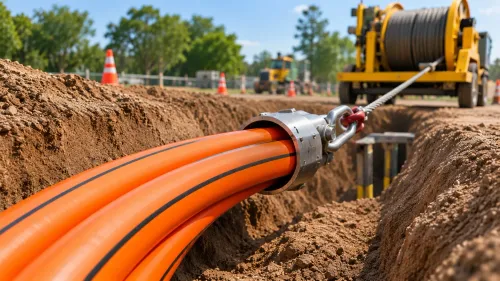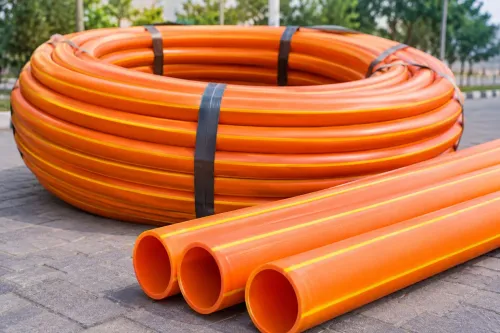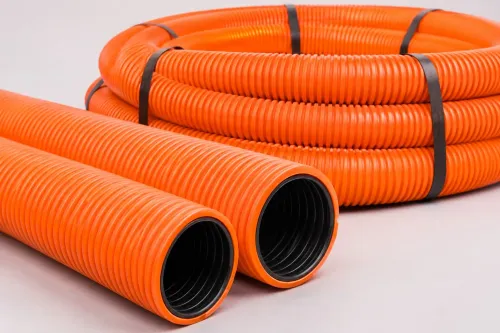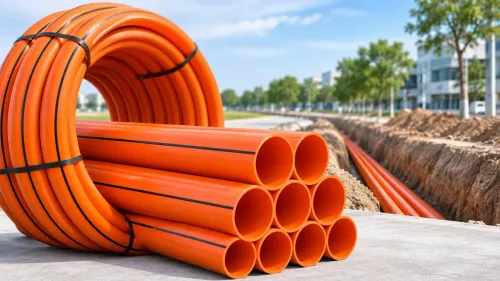
Nagpur’s low-to-mid 40s °C summer heat, intense sun and monsoon ground saturation affect an HDD duct in different ways. You will be able to separate long-term buried performance from temporary installation risks, then check whether a proposed duct, pullback plan and supplier file match the crossing.
Key takeaways
- Allow for heat-driven stiffness loss and thermal movement during design.
- Store black ducts away from direct sunlight before installation.
- Control bore water, slurry and pullback forces during cable protection work.
- Match SDR and PE grade to crossing loads using supplier records.
What Nagpur Heat Does to an HDPE HDD Duct
Nagpur’s summer air temperature can reach the low-to-mid 40s °C, while a black duct in direct sun becomes hotter. For an HDPE HDD duct pipe for Nagpur weather, that heat reduces stiffness and increases thermal movement; it does not automatically disqualify a correctly selected pipe.
Check the manufacturer’s storage, installation and service-temperature limits, SDR, pulling load and any elevated-temperature derating.
- Storage: Keep pipe shaded, supported and capped. Uneven supports combined with heat can create ovalisation or permanent bends before installation.
- Pulling: Hot HDPE is less stiff, so drag, bend stress and collapse risk increase. Control pulling speed, lubrication, bend radius and the manufacturer’s maximum pulling force.
- Fusion: Clean and align the ends, follow the specified heater temperature and allow the joint to cool without movement. Rushing cooling can weaken the joint.
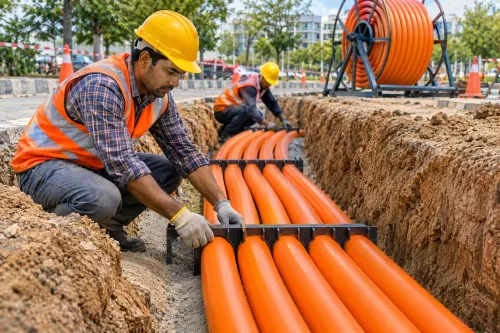
- Cable installation: Let the duct settle after pullback, then inspect and clear it before installing the cable. Seal both ends; heat does not excuse silt, insects or drilling-fluid residue entering the duct.
- Buried service: Soil restrains thermal movement and shields the duct from sunlight. Confirm the SDR and temperature derating for the expected load and service temperature.
HDPE expands about 0.18 mm per metre per °C; a 40°C change can produce roughly 7 mm per metre if the pipe is free to move. Above-ground transitions need sliding supports or expansion allowance, while hdd duct pipe weather conditions must be assessed before rigidly fixing exposed lengths.
How Sunlight and Outdoor Storage Change the Design
UV threatens an HDPE duct while it remains outdoors, not after adequate burial shields it from sunlight. The risk is highest for stored coils or straight lengths, exposed risers, temporary above-ground runs and uncovered ends left at chambers or cabinet approaches.
1. Specify black HDPE compounded with carbon black or another documented UV-stabilised compound. Do not accept colour alone as proof of protection; request the compound designation, manufacturer’s outdoor-exposure limit and batch records.
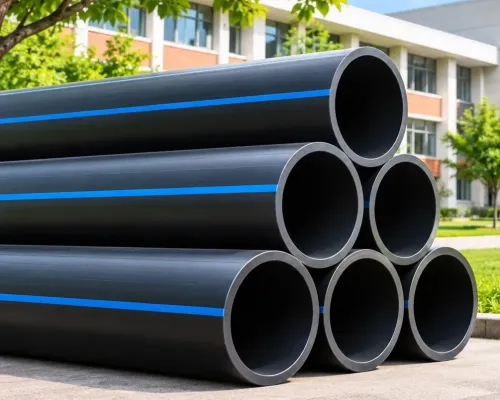
2. Store pipe on level supports under an opaque, ventilated cover. Keep it away from direct sun, sharp edges and standing water, and rotate stock so older material is installed first.
3. Inspect exposed pipe before hdpe pipe outdoor installation. Reject sections with chalky surfaces, cracking, deep scratches or impact damage, then cap every end to exclude monsoon water, silt, insects and drilling-fluid residue.
4. Allow for solar heating after installation. A free HDPE length can move about 0.18 mm per metre for each 1°C change; a 40°C swing produces roughly 7 mm per metre. Use supports, expansion allowance and restrained transitions instead of rigidly fixing long exposed runs.
Buried duct is primarily protected from UV, but exposed sections at bridge crossings, railway crossings and chambers still need UV-stabilised material, impact protection and secure supports. These controls preserve hdpe duct durability nagpur through intense sun and monsoon construction.
How Monsoon Water Affects Pullback and Cable Protection
Rainfall does not weaken buried HDPE; it changes whether the bore stays open and whether a clean duct reaches the cable crew. Treat HDD duct pipe weather conditions as construction controls, and stop pullback if a pit wall undermines, drilling-fluid returns disappear, or slurry pressure shows uncontrolled loss into surrounding soil.
Before pullback, control these points:
- Dewater entry and exit pits without washing soil from beneath the bore or destabilising the working platform.
- Check groundwater and saturated soil for bore collapse, then adjust drilling-fluid viscosity and pressure to maintain the hole without fracturing surrounding ground.
- Record drilling-fluid returns. Lost returns can leave voids, reduce bore support and increase the risk of duct deformation during pullback.
- Keep duct ends capped during storage, pullback and chamber work. Open ends admit rainwater, silt, insects and muddy residue that can block rope installation, cable blowing or mandrel testing.
- Restrain an empty duct in flooded pits because HDPE is lighter than water. Use temporary ballast, straps or controlled backfill until adequate cover holds it down.
- Inspect the duct after pullback and remove standing water or slurry before cable installation. Do not treat an intact outer wall as proof that the inside is usable.
For HDPE duct pipe in Maharashtra, include temporary seals, dewatering arrangements, return-loss limits and post-pullback cleaning in the method statement. Keep the route stable before releasing the duct to cable installers; otherwise a monsoon failure becomes a cable-access problem weeks later.
How to Prepare the Bore and Prevent Installation Damage
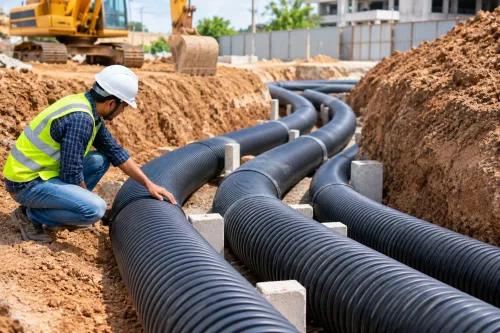
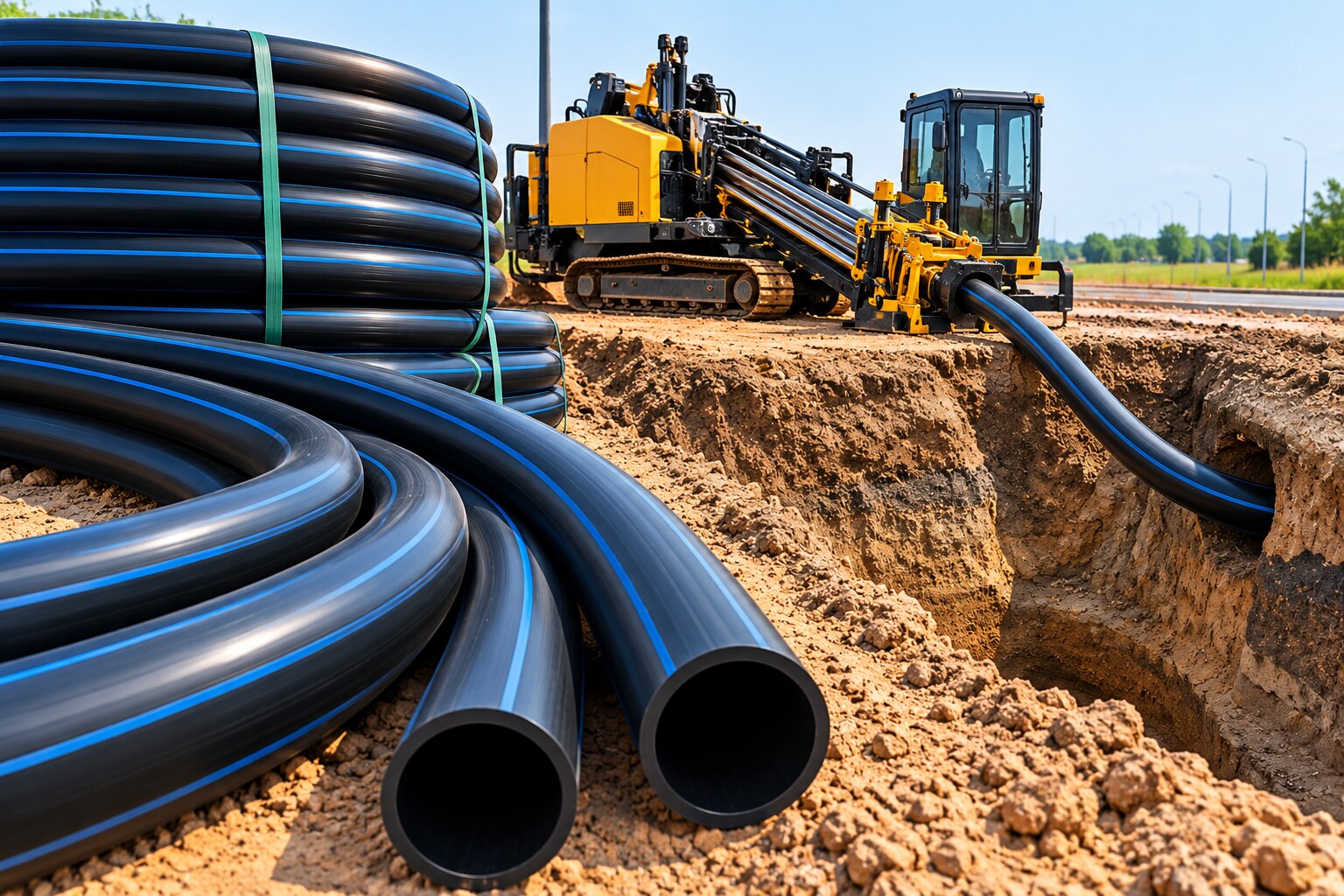
A surveyed, smoothly aligned bore and a controlled pullback keep an HDPE HDD duct pipe for Nagpur weather from excessive load and shape damage. Before drilling, map utilities, record soil strata and groundwater, set entry and exit angles, and design the bore profile for the actual pullback length.
- Use the bore plan to check allowable tensile load, minimum bend radius, sidewall pressure at every curve and the duct’s reduced stiffness when its surface is hot.
- Ream progressively to the planned diameter, remove sharp ledges, and confirm drilling-fluid returns. A collapsing or over-enlarged section can increase drag, buoyancy and buckling.
- Fit a swivel, calibrated load cell and suitable rollers or bellmouths. Stop if pull force rises sharply, the duct scrapes the entry pit, or the measured load approaches the approved limit.
- Keep the duct continuously supported and aligned. Do not exceed its minimum bend radius, drag it over rock, or force a coil into a tight turn.
- Seal both ends before pullback and during delays. This blocks slurry, silt, insects and monsoon water that can obstruct a rope, mandrel or cable.
Survey and pullback controls address different failures:
| Failure | Control to verify | Result |
|---|---|---|
| Crushing or ovalisation | Correct reamer size, rollers and bend-radius checks | Round, usable duct |
| Scraping | Bellmouths, clean pit edges and protected supports | Intact outer wall |
| Blocked duct | Caps, clean fluid and post-pull mandrel test | Clear cable route |
| Overload or buckling | Load-cell readings and a smooth alignment | Pull within design limits |
For an HDPE pipe outdoor installation, protect exposed coils and risers from hot sun, impact and uncontrolled thermal movement; outdoor heat changes stiffness before pulling begins.
How to Match SDR, PE Grade and Supplier Records to the Crossing
Match the duct to the calculated pull force, bend radius and sidewall pressure—not to nominal diameter alone. ASTM F1962 provides the design framework: check pullback length, bore alignment, curves, temperature-reduced stiffness and the manufacturer’s allowable tensile load.
| Decision point | What to verify | Approval basis |
|---|---|---|
| SDR | Outside diameter, wall thickness and SDR; a lower SDR means a thicker wall | Confirm the wall survives pulling, crushing and installation loads |
| PE grade | Resin classification such as PE80 or PE100, plus tensile and impact values | Require values for the specified conduit standard; a water-pipe SDR alone proves nothing |
| Joint and route | Butt-fusion or electrofusion procedure, minimum bend radius and sidewall-pressure limit | Match the joint record and limits to the bore profile and pullback plan |
| Exposed sections | UV-stabilised compound, supports, thermal-movement allowance and impact protection | Apply this at chambers, bridges, railway crossings and cabinet approaches |
Before approval, request these records:
- Manufacturer’s datasheet stating standard, resin grade, diameter, wall thickness, SDR, impact requirement and allowable pulling load.
- Lot or batch certificate linking the supplied coils or pipes to resin and dimensional test results.
- Fusion procedure, operator qualification, heater calibration and machine data for temperature, pressure, alignment, heating and cooling.
- Inspection records showing no ovalisation, gouges or contamination, plus a pullback calculation signed against the actual bore.
For HDPE duct durability in Nagpur, exposed black pipe needs separate scrutiny from buried pipe. TATFLOW’s documentation is useful only when it supplies these project-specific values for the HDPE duct pipe in Maharashtra, rather than repeating a general product description.
Related products
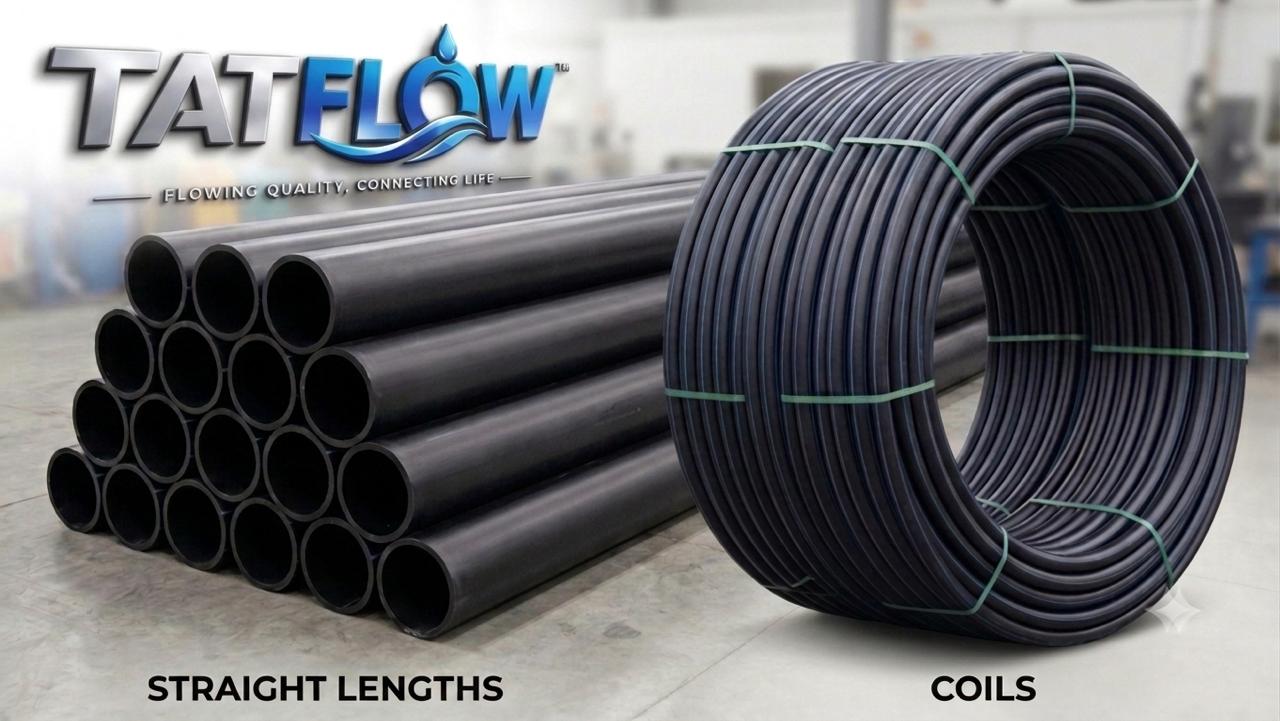 | HDPE DUCT Pipes for HDD Applications HDPE DUCT Pipes for HDD Applications Reliable HDPE Ducting for Modern Electrical Infrastructure TATFLOW HDPE Pipes for Electrical Ducting are designed to provide a reliable, durable and... View product → |
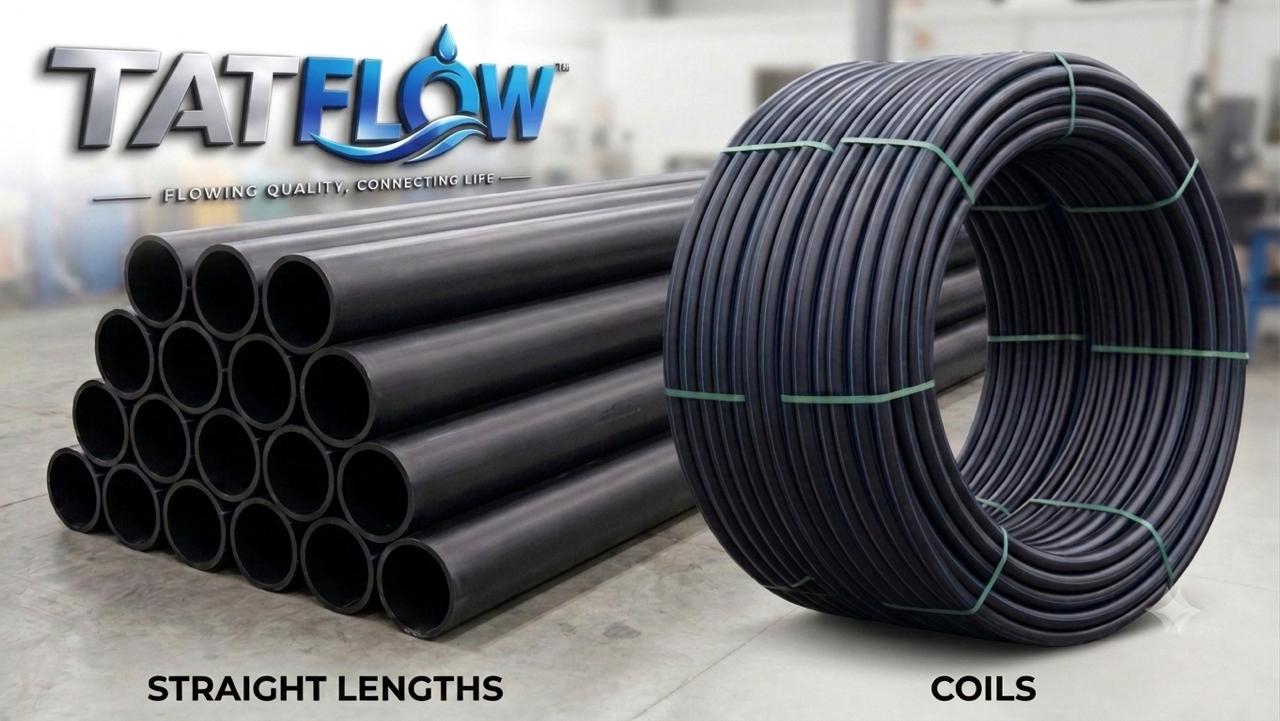 | TATFLOW HDPE Pipe for Electrical Ducting Solutions (HDD Application) TATFLOW HDPE Pipe for Electrical Ducting Solutions (HDD Application) TATFLOW HDPE Pipe for Electrical Ducting Solutions (HDD Application) Reliable HDPE Ducting for Modern Electrical Infrastructure TATFLOW HDPE Pipes... View product → |
Frequently asked questions
How does Nagpur heat affect an HDPE HDD duct?
Nagpur summer heat reduces HDPE stiffness and increases thermal movement, especially when a black duct sits in direct sun. Select and handle the duct with those effects in mind.
How should you store an HDPE duct before outdoor installation?
Keep the duct protected from direct sunlight and avoid storage conditions that introduce deformation before the HDD crossing begins.
How does monsoon water affect HDD duct installation?
Water and drilling slurry affect bore stability, pullback conditions and cable protection. Prepare the bore and manage the installation so water does not increase damage or pulling risk.
How do you choose SDR and PE grade for an HDD crossing?
Match SDR and PE grade to the crossing’s loads and installation demands, then verify the choice against supplier records before procurement.
Keywords