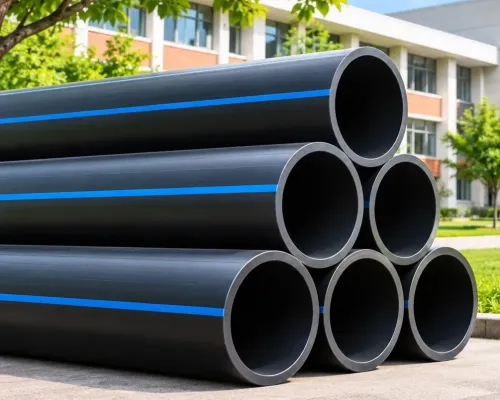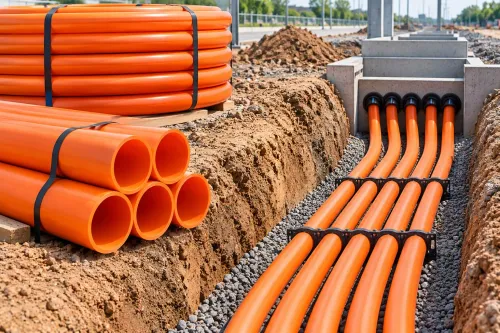
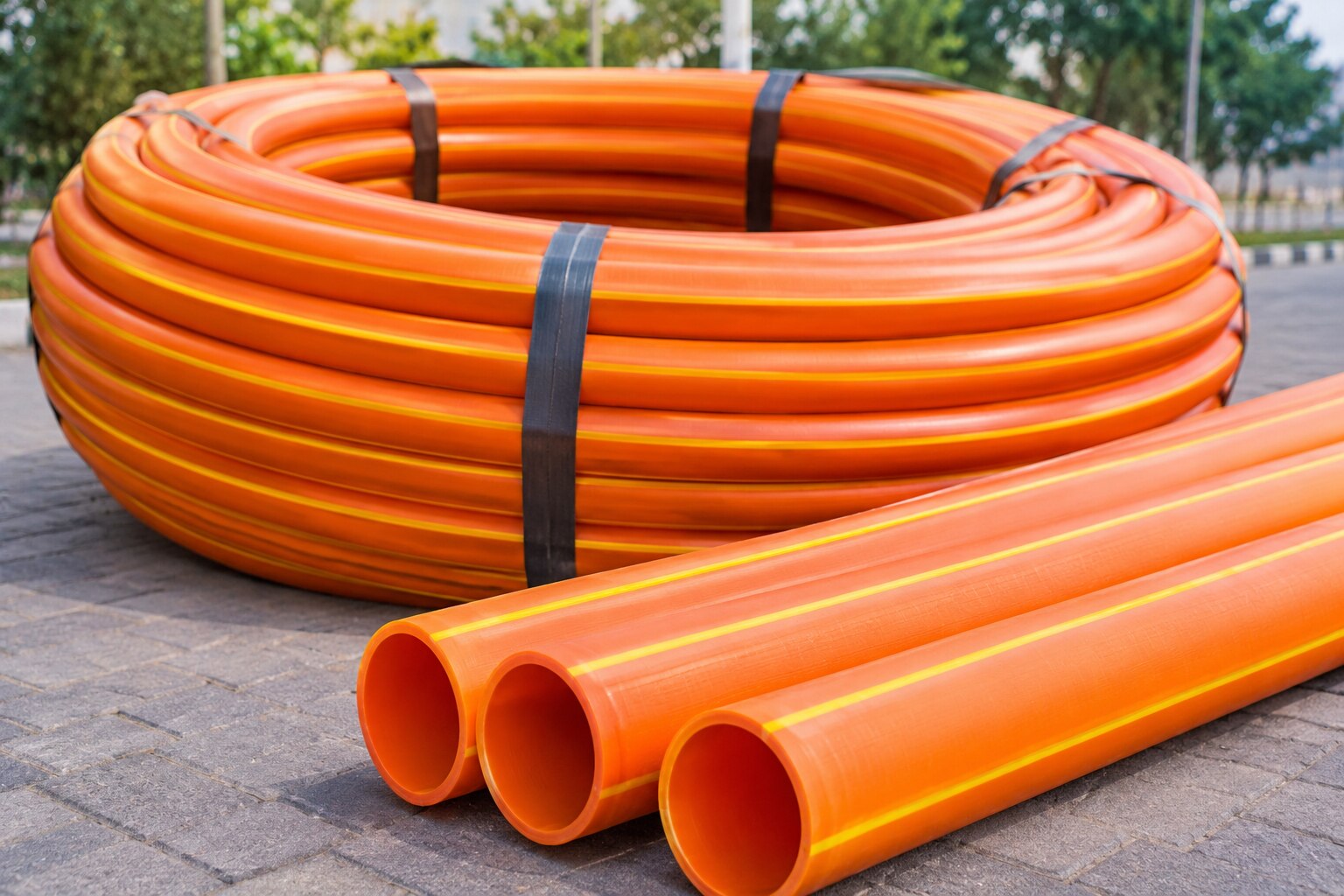
A PLB duct can be used beneath a railway track only when the railway asset owner approves the crossing design, installation method and protection arrangement. By the end, you will know how to assess railway crossing duct pipe suitability, compare trenchless methods, specify the duct, and prepare the evidence required for acceptance.
Key takeaways
- Confirm the railway owner and engineering and signalling jurisdictions before design.
- Obtain approval for the crossing method before disturbing the track formation.
- Provide spare ducts, separation and access points for signal and telecom cables.
- Compare test reports, traceability records and railway-project experience before buying.
When is a PLB duct suitable beneath a railway track in Nagpur?
A PLB duct is suitable beneath a railway track in Nagpur only when the railway owner approves the crossing design. The label “PLB” and HDPE material do not create approval. Confirm whether the asset belongs to Central Railway’s Nagpur Division, South East Central Railway or another authority, then identify its engineering and signalling jurisdiction.
Submit a proposal containing:
- Railway division, chainage and crossing angle
- Rail formation profile and proposed depth
- Duct material, dimensions and installation method
- Casing, sleeve or other protection arrangement
- Construction controls, reinstatement method and surveyed as-built location
No universal 1.2 m cover rule applies. The approved profile must account for ballast, subgrade, drainage, future track work, existing utilities, construction tolerances and the selected installation method. A crossing beneath an active or proposed track needs railway scrutiny; ducting beside a track or inside a station compound is a different decision.
PLB is a cable conduit, not automatically a pressure-rated water pipe, rail-load-bearing casing or railway-approved signal duct. A casing may be required for mechanical protection, leakage containment or future removal. The phrase plb duct pipe for conditions beneath railway tracks nagpur describes a search, not a technical clearance.
For railway crossing duct pipe suitability, proceed only when the authority accepts the drawing, method statement and protection arrangement. Municipal or road approval cannot substitute for that acceptance.
Which installation method protects the track formation?
For an active railway crossing, trenchless installation is usually the starting point because it avoids opening the track formation.
| Method | Effect on formation | Main design focus |
|---|---|---|
| HDD | Crosses below the track without an open trench | Bore steering, reaming, pullback forces and duct protection |
| Guided boring | Controls the bore along a designed line and grade | Alignment, launch and reception pits, and ground stability |
| Auger boring | Installs a bore, often with a casing | Casing grade, soil removal and service-duct insertion |
| Pipe jacking | Pushes a casing or pipe beneath the track | Jacking forces, joints, face stability and casing installation |
| Open cut | Opens the formation directly | Possession, temporary works, excavation, backfill and inspection |
HDD, guided boring, auger boring and pipe jacking still need an engineered bore profile, entry and exit pits outside the protected railway zone where practicable, bore-stability calculations, drilling-fluid control and a contingency plan for inadvertent returns or collapse.
Auger boring and pipe jacking may provide a casing into which the service duct is installed; HDD places greater emphasis on steering, reaming, pullback forces and protecting the duct during installation.
Confirm these checks before using a PLB duct pipe under railway track:
- Soil strata, groundwater, rail and formation loading, settlement risk and bore alignment
- Cover to the formation, signalling and drainage assets, and safe entry and exit workspace
Open cut requires a railway-approved possession or traffic block, temporary works design, track and signalling protection, controlled excavation and backfill, and railway inspection before reopening. A stronger HDPE duct alone does not authorise excavation.
What must the duct layout provide for railway signal and telecom cables?
Confirm railway signal cable duct requirements on the approved signalling and utility drawings before selecting the duct. Signal, telecom, power and other utility routes must follow the railway design; one commercial PLB duct is not automatically suitable for every cable type.
Signal cables are safety-critical, so obtain railway or RDSO acceptance rather than inferring approval from telecom use.
For railway track ducting conditions Nagpur projects, the drawing should show:
- Separate routes, spare ducts, draw ropes and cable bend-radius clearance.
- Chamber spacing, sealed ends, water and silt exclusion, route markers and access for future cable replacement.
- Continuous duct lengths through the railway zone wherever practicable, with joints and chambers in approved accessible locations outside the formation.
- A casing, sleeve or other protective arrangement when the drawing requires mechanical protection, leakage containment or future removal.
- Tracer wire, detectable marker tape or another approved locating system. Non-metallic HDPE is invisible to a conventional cable locator.
Pre-lubrication reduces friction during cable pulling or blowing; it does not prevent external crushing, ovalisation, buckling, point loading, thermal movement or HDD damage. Check the installed-condition design, not just the duct label.
A protected casing can also simplify replacement and isolate the service from railway work. Do not place an accessible joint pit beneath the track formation when an approved outside location is available. Seal unused ducts and leave enough termination length to avoid excavating under the railway later.
What should you compare before selecting a PLB duct supplier?
A nominal SDR or tensile figure does not prove resistance to railway loading or HDD pullback, and a casing specification cannot be replaced by a product label. Compare documents, not catalogue claims.
Request this evidence from every supplier:
- Outside diameter, inside diameter, wall thickness, and SDR or pressure class where stated
- Material grade, impact performance, crush resistance, and ring-stiffness or equivalent test evidence
- Operating temperature range, batch number, and product test reports
- The current Indian Railways, RDSO, zonal railway, or project-specific specification named in the crossing documents
| Option | Pullability and access | External protection and installation |
|---|---|---|
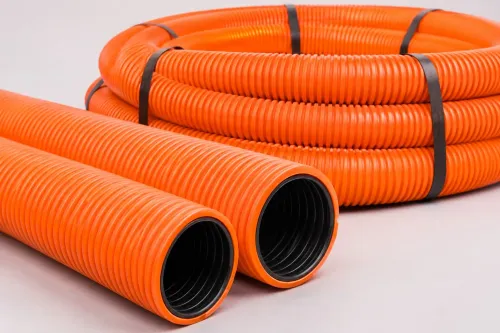
| Pre-lubricated PLB duct | Low internal friction; cable replacement is straightforward | Flexible, but verify crush, ovalisation and HDD-force evidence |
| Smooth HDPE duct | Good bendability; cable pulling needs lubricant and careful tension control | Flexible; compare tested crush resistance |
| Corrugated duct | Flexible and abrasion-tolerant; internal ribs can hinder pulling or replacement | Check collapse under load and sealing at joints |
| Rigid PVC conduit | Jointed installation; cable replacement depends on bends and access points | Rigid, but vulnerable to impact and cold; assess fire exposure |
| Steel casing | Cable duct needs a separate inner route; removal and joint access require planning | High mechanical protection and electromagnetic shielding; bond or isolate it as designed |
| Concrete-encased duct | Replacement requires accessible spare ducts and chambers | Strong against loading; difficult to alter, and fire performance depends on the assembly |
Also compare bend radius, jointing method, fire exposure, electromagnetic separation, and cable-replacement access. Municipal or road-authority approval is not railway acceptance. For a documented HDPE ducting supplier such as Tatiwar Agro Industries, apply this checklist and demand traceable certificates rather than relying on the PLB name.
Related product
 | PLB DUCT pipe for Railway Signal & Telecom Ducting TATFLOW PLB DUCT pipe for Railway Signal & Telecom Ducting TATFLOW PLB Duct Pipe is a high-quality ducting solution designed for the safe and efficient installation and protection of Railway Signal,... View product → |
What evidence is required before the railway accepts the crossing?
Acceptance starts with a railway-approved crossing drawing, not a duct certificate. Submit the drawing, method statement, risk controls, possession or work-block arrangements, current utility records, service-location survey, bore profile, verified cover, casing details, drilling-fluid and collapse contingency plan, reinstatement procedure, and inspection hold points as one package.
- Physically locate signalling, electrical, telecom, drainage and earthing systems before boring. Clearing the rails does not clear buried railway assets; a bore can miss the track and still damage a signalling cable, drain or earth electrode.
- Record the approved bore alignment, depth, cover to formation, entry and exit points, casing arrangement, and construction tolerances.
- Keep joints and chambers out of the track formation where practicable, then show their approved locations and the reinstatement sequence.
- Define who witnesses each hold point and provide surveyed as-built coordinates before requesting handover.
The acceptance record should confirm:
- duct certificates, batch identification, measured outside and inside dimensions, and wall thickness;
- mandrel or proving tests, continuity and blockage checks, and draw-rope installation;
- sealed ends, water and silt exclusion, and verified route markers;
- chamber condition and surveyed as-built coordinates;
- no unacceptable ovality, crushing, cracking or other installation damage;
- spare ducts and spare capacity remain usable for future cable installation.
The railway authority must approve the product, route, protection arrangement, construction method and inspection records as one design. Use PLB beneath the track only after that complete acceptance, not after a visual check of the duct ends.
Frequently asked questions
When is a PLB duct suitable beneath a railway track in Nagpur?
A PLB duct is suitable only after the railway owner approves the crossing design. First confirm whether the track falls under Central Railway’s Nagpur Division, South East Central Railway or another authority, then identify the responsible engineering and signalling jurisdictions.
Which installation method protects the track formation?
Use the installation method accepted in the approved railway design and avoid disturbing the formation without written permission. The design must account for cover, alignment, construction loads, access and restoration requirements.
What must the duct layout provide for railway signal and telecom cables?
The layout must show dedicated routes, cable separation, spare capacity, bend control, draw pits or access points and protection against crushing, water ingress and future maintenance damage.
What should you compare before selecting a PLB duct supplier?
Compare dimensional and pressure test reports, resin and batch traceability, marked duct identification, installation guidance, quality records and evidence of supplying comparable railway or utility crossings.
What evidence is required before the railway accepts the crossing?
Prepare the approved drawing, method statement, permits, material certificates, batch records, installation logs, survey or as-built records, test results and inspection sign-offs requested by the railway authority.
Keywords