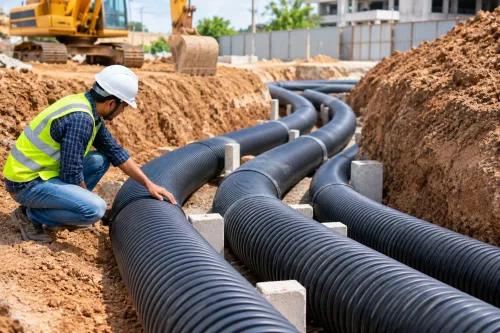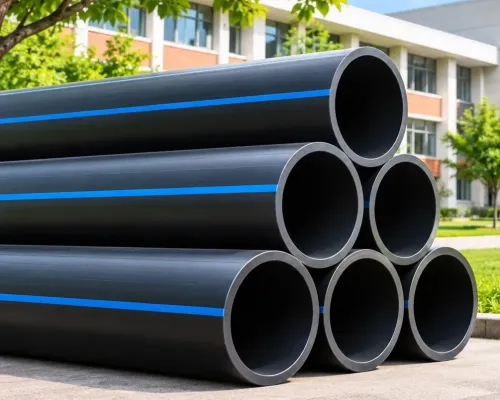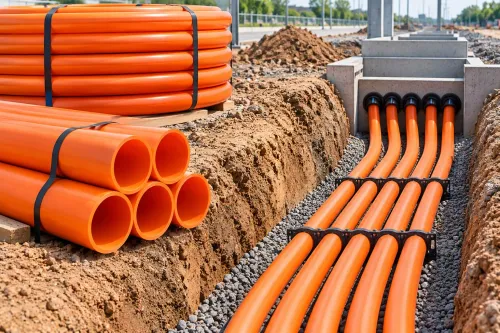
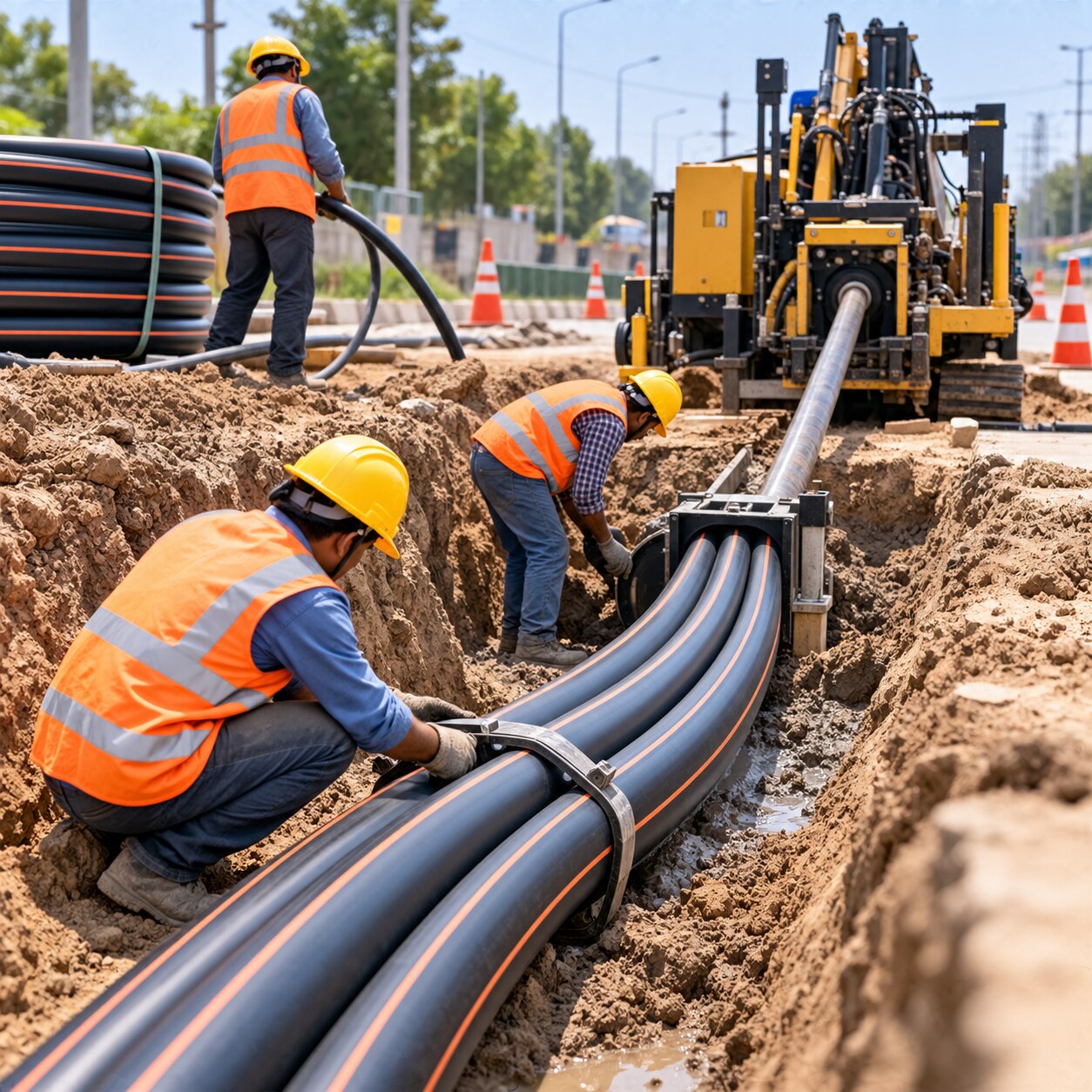
A failed pilot bore, rising pull force, or blocked duct can turn an HDD installation into an expensive excavation. You will learn how to isolate the failure, prove the installed duct, choose between repair and a new bore, and specify controls that prevent repeat damage.
Key takeaways
- Stop pulling and record the last safe load before investigating duct damage.
- Use bore records, pull force and duct tests to separate failure causes.
- Mandrel and rope tests must pass before you install an electrical cable.
- Choose repair, replacement or a new bore based on defect and access.
Start at the Failure Point: Pilot Bore, Reaming or Pullback
Stop the winch, isolate the drill rig and record the last safe load before diagnosing hdpe electrical duct problems hdd nagpur crews encounter. Do not increase pulling force until you have checked the bore, duct connection and pulling head.
1. Identify the stage of failure. Compare the pilot-bore survey with the planned line and grade, then review torque, pull-load and drilling-fluid-return records. Rising torque, poor returns or inadequate reamer clearance points to a blocked or poorly conditioned bore; a clean bore with a sudden pull spike points to duct tension or connection damage.
2. During reaming, stop a stuck reamer immediately. Check circulation, returns, hole cleaning, staged reamer sizes and annular clearance before backing out or reaming again. Excessive speed, lost fluid circulation or insufficient conditioning can leave a bore too tight for safe pullback.
3. During pullback, respond to the symptom. A broken rope requires securing both ends and checking continuity; a vanished duct end requires locating the duct before pulling again. A crushed duct has flattened walls, while a kink creates a sharp local bend; inspect both entry and exit geometry, rollers and bend radius.
4. Separate connection failure from duct failure. A failed joint shows separation at the fusion or coupler; damage at the pulling head concentrates tearing or crushing at the duct mouth. Check the swivel and pulling-head load path before blaming the bore.
A blocked bore resists movement from the start or produces high torque and poor returns. Excessive pulling tension produces a sharp load increase in a confirmed-clear bore. Winch force cannot correct either condition; it can buckle HDPE, strip a joint or tear the pulling head connection.
Separate Duct Damage from Bore, Geometry and Load Problems
A duct defect is not automatically a failed bore. Separate the plastic damage, bore condition and pulling load before choosing a repair.
1. Inspect the entry, exit, ends, joints and exposed barrel. A crushed or buckled wall shows flattened ovality; a kink forms a sharp local fold; a split or puncture leaves a linear tear or hole; a failed joint shows separation, offset or an incomplete fusion bead.
Measure end-to-end duct length and compare it with the route record. A shorter length, inaccessible end or stopped measuring tape identifies displacement or collapse.
2. Match the appearance with load history. A load spike at the entry or exit points to inadequate bend radius, poor roller placement or sharp temporary geometry. Gradual overload can reflect unstable ground, insufficient annular clearance, poor hole cleaning, excessive reaming speed or lost fluid circulation.
A sudden drag increase after fluid loss can also indicate inadequate duct buoyancy control. Review calibrated pull-load and torque records before increasing winch force.
3. Check the connection and specification. Use a swivel so drill-string rotation does not reach the HDPE, and use a properly designed pulling head that transfers force through the pipe wall or fused end. Set torque limits and the manufacturer’s pull and bend limits.
Leave cooling allowance on long exposed lengths; hot, elongated duct can contract into a kink or pull from fittings.
SDR equals outside diameter divided by minimum wall thickness. Matching outside diameter does not justify substituting another SDR: a lower SDR has a thicker wall and different deformation and pullback resistance, creating further electrical duct pipe problems and cable-conduit mismatch.
Prove the Duct Before You Install a Cable
Before cable installation, cap inspection must confirm that both duct ends are clean, undamaged and sealed against drilling fluid, soil and water. For hdpe electrical duct problems hdd nagpur crews should complete and record this sequence for every route:
- Remove caps and inspect each end for distortion, splits, contamination or a damaged pulling head.
- Push a correctly sized brush or sponge through the full duct to remove loose soil and drilling fluid.
- Pass the specified mandrel. A stopped mandrel identifies a kink, ovality, obstruction or collapsed section; mark its distance from the entry end.
- Pull the draw rope through and back, or verify continuity with a measured rope. A broken rope indicates loss of continuity or internal damage.
- Perform an air-pressure check when the project specification requires it, recording pressure and hold time.
- Use CCTV where the mandrel, rope or air test indicates damage, contamination or an unexplained restriction.
- Verify duct position, cover depth and separation from other utilities against the approved alignment and crossing records.
- Measure the installed end-to-end length and compare it with the route measurement.
Accept the duct only when its bend radius meets the manufacturer’s limit, ovality stays within the project tolerance, ends have caps or other end protection, and the draw rope is continuous, secured and free of knots. Record every result against duct number, route, chainage, date and test operator before closing pits.
Choose Repair, Replacement or a New Bore by Defect and Access
A failed proof test does not automatically justify pulling harder or opening the entire route. Locate the failure, expose the duct where practical, and match the remedy to the defect and access available.
| Defect | Immediate decision | Suitable remedy |
|---|---|---|
| Failed proving mandrel | Stop and locate the obstruction; inspect for kink, ovality or collapse | Excavate and replace the damaged section; cut and rejoin with an approved coupler, butt-fusion or electrofusion only if the specification permits |
| Broken pulling rope | Check rope continuity, duct ends and internal damage | Install a new rope after cleaning and reproving; abandon the section or replace the duct if continuity cannot be restored |
| Missing duct end | Survey the alignment before digging or pulling cable | Excavate to locate and expose it; install replacement duct and a qualified joint, or abandon that section |
| Drilling fluid inside the duct | Do not install cable into contaminated duct | Clean, dry and reprove it; replace the affected section if fluid, soil or water cannot be removed |
| Cable will not pass | Separate cable-conduit mismatch from obstruction or excessive bend | Verify diameter, bend radius and mandrel clearance; replace the duct or drill a new parallel bore when access is inadequate |
Buried repairs have strict limits. Oval or contaminated ends, wet or poorly prepared fusion surfaces, incorrect heater settings, movement during cooling and missing fusion-cycle records can invalidate a joint even when its bead looks continuous.
These electrical duct pipe problems require the project specification and manufacturer instructions to decide whether in-place repair is acceptable, especially on a continuous buried route with no accessible chamber.
Write the HDD Duct Specification and Evaluate the Contractor
A practical hdd hdpe duct solution nagpur specification must state limits, not merely name a diameter and “HDD suitable.” Require the manufacturer’s SDR, allowable tensile load after temperature and bend reductions, minimum cold-bend radius, bore diameter, staged reamer sizes, maximum monitored pull and torque, and the pulling-head and swivel drawings.
- Match pilot, intermediate and final reamers to duct outside diameter, ground condition and annular clearance; record torque and pull continuously.
- Specify a drilling-fluid recipe: water quality, bentonite or polymer type and concentration, viscosity, pH and sand-content limits. Stop and contain returns during a frac-out; notify the utility owner, isolate the release, recover fluid and document cleanup.
- Require a swivel rated above the calculated load and a full-circumference pulling head that grips without crushing the duct. Cap both ends during staging and immediately after pullback.
- Accept fusion only from qualified operators using recorded heater temperature, pressure, alignment, bead inspection, cooling time and joint identification.
- Prove each installed duct with cleaning, a calibrated mandrel, rope continuity, end-to-end length and depth records; add air-pressure or CCTV checks where specified.
The Nagpur bore log must identify black-cotton soil, alluvial deposits, weathered rock and harder Deccan basalt-related ground. Soft saturated soil can collapse, while rock can raise torque and reduce fluid returns; one reamer plan cannot suit every layer.
When comparing an hdpe cable ducting contractor nagpur, request completed-bore records, pullback-load logs, fusion records, utility-crossing controls and mandrel results—not just evidence of an HDD rig. Ask TATFLOW about SDR, installation limits, fusion documentation and field support, then choose only evidence matching your route.
Related products
 | HDPE DUCT Pipes for HDD Applications HDPE DUCT Pipes for HDD Applications Reliable HDPE Ducting for Modern Electrical Infrastructure TATFLOW HDPE Pipes for Electrical Ducting are designed to provide a reliable, durable and... View product → |
 | TATFLOW HDPE Pipe for Electrical Ducting Solutions (HDD Application) TATFLOW HDPE Pipe for Electrical Ducting Solutions (HDD Application) TATFLOW HDPE Pipe for Electrical Ducting Solutions (HDD Application) Reliable HDPE Ducting for Modern Electrical Infrastructure TATFLOW HDPE Pipes... View product → |
Frequently asked questions
Where should you start when an HDPE duct fails during HDD work?
Identify whether the failure occurred during the pilot bore, reaming or pullback, then stop the winch and record the last safe load.
How can you distinguish duct damage from bore or load problems?
Compare pull-force records, bore geometry, duct connections, pulling-head alignment and visible damage before deciding that the duct itself failed.
How do you prove an HDPE duct is ready for cable installation?
Inspect the duct, confirm a continuous rope, pass a mandrel through the route and remove debris or deformation before cable installation.
When should you repair, replace or create a new HDD bore?
Repair accessible connection or end damage, replace a damaged section when access allows, and choose a new bore for crushed or obstructed buried duct.
What should an HDD duct specification and contractor evaluation include?
Specify duct dimensions, SDR or wall thickness, pulling limits, joining method, bore records, testing, reinstatement and the contractor's documented experience.
Keywords