Water-filled chambers, silt, crushed ducts and damaged cable sheaths can turn a routine railway signalling repair into an outage risk. You will be able to diagnose the failure, specify the duct and route correctly, and choose between cleaning, replacement, parallel installation or HDD instead of treating PLB as a universal fix.
Key takeaways
- Trace the route and confirm live cables before selecting a replacement duct.
- Use a draw rope and calibrated mandrel to prove duct continuity.
- Compare cleaning with replacement after checking blockages, damage, and occupancy.
- Document chamber checks, crossings, tests, and handover results.
Which Railway Duct Problems Must You Diagnose First?
Diagnose the failure before specifying a PLB duct pipe for railway signal problems in Nagpur. Trace the route, record chambers and crossings, confirm occupancy, and test continuity with a draw rope and calibrated mandrel. Do not pull a new duct through an occupied route until you know whether live signalling or telecom circuits are inside.
| Cause | Evidence to collect | What it confirms |
|---|---|---|
| Water ingress | Flooded chamber, wet cable sheath, open duct ends, missing seals and poor drainage after rain | Water entry, not a pipe-wall defect |
| Silt blockage | Mud or slurry on a duct brush, reduced bore, blockage that worsens after runoff | Sediment ingress or an unsealed chamber |
| Crushing | Mandrel refusal at one location, flattened cross-section or damage beside a road or track crossing | External loading or excavation damage |
| Joint failure | Coupling displaced, separated or leaking; continuity stops at the joint | Assembly or movement failure |
| Cable-pulling damage | High pulling tension, sheath scuffs, broken draw rope or a sharp internal obstruction | Installation friction or internal damage |
Use rodding, brushing and CCTV inspection to locate the fault before replacement. A duct that is continuous but flooded needs drainage and end sealing; a crushed or sharply obstructed duct needs repair or diversion. Pre-lubrication cannot correct either condition.
Also identify the cable type. Fibre, copper multicore signalling circuits, axle-counter wiring and power cables require different separation, mechanical protection and testing. A PLB duct can reduce pulling abrasion, but it cannot replace railway acceptance requirements or compensate for an undersized route.
How Should a Protected Railway Signal Duct Route Be Built?
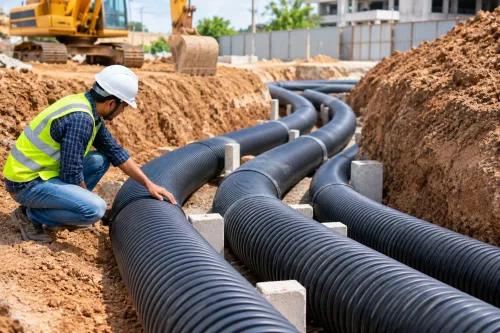
Build the route on the highest practical, least-flooded alignment, away from drainage channels, unstable shoulders and repeated excavation. Treat railway signal duct protection in Nagpur as a route design, not a PLB pipe purchase: signalling circuits, power cables, copper multicore cables, axle-counter circuits and fibre links need defined separation, access and protection.
- Survey existing railway, power, telecom, water and drainage assets before digging; mark every crossing and obtain railway work approval.
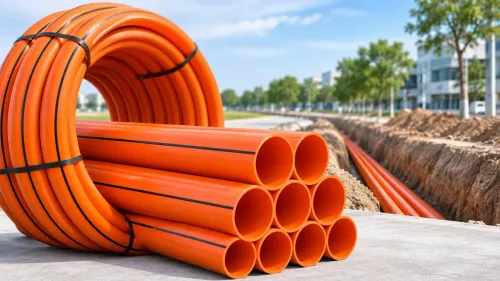
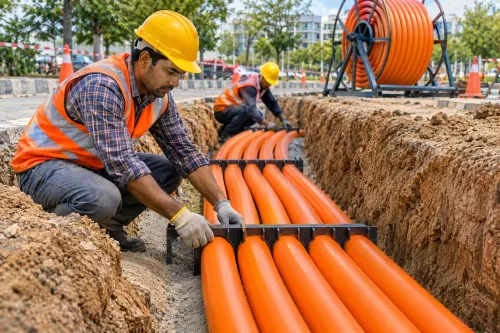
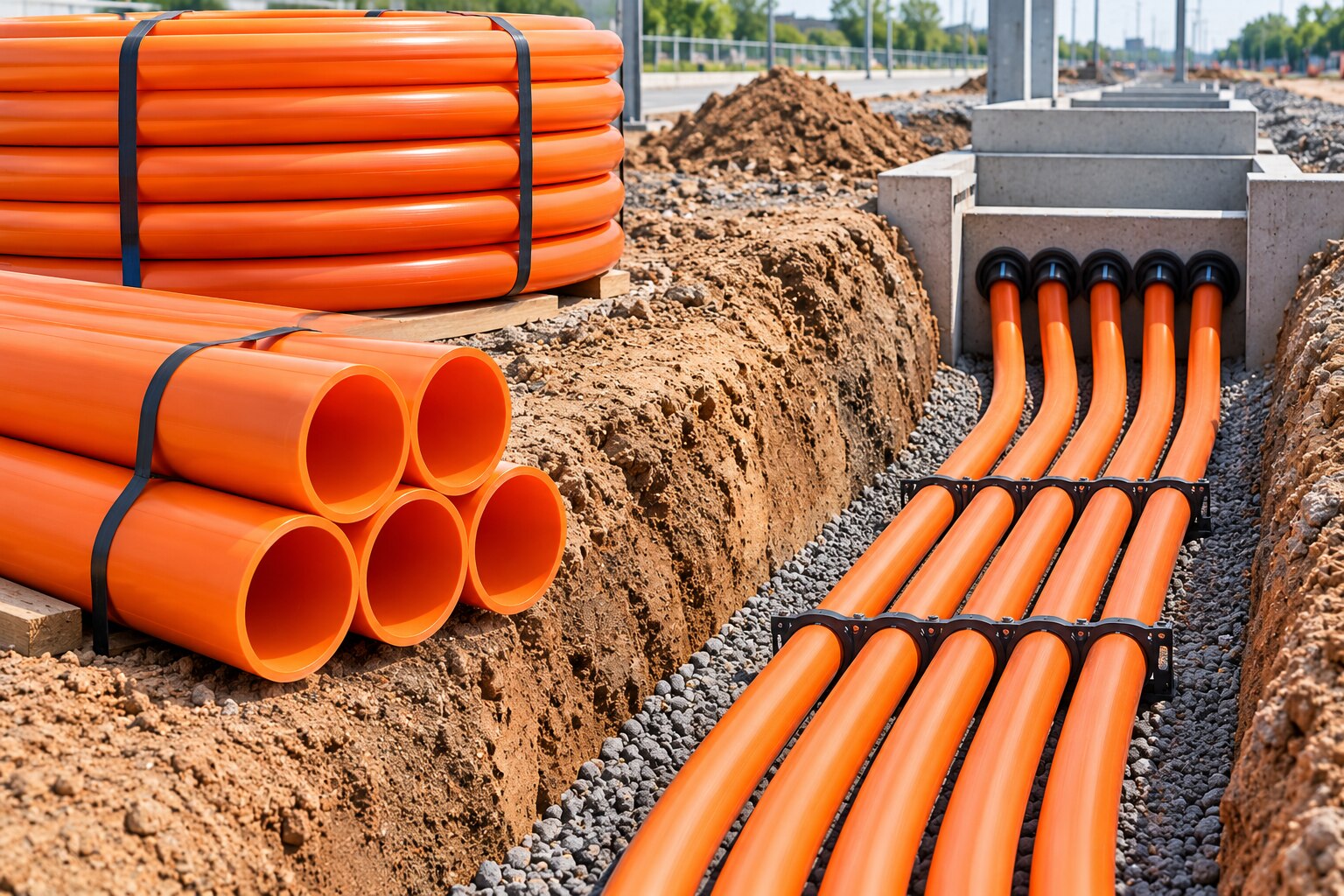
- Use a continuous trench with stable sidewalls, compacted bedding and enough cover for the location. Increase protection where shallow cover, road traffic or maintenance vehicles create crushing risk.
- Separate signalling and telecom ducts from power cables and place warning tape or protection slabs above the route. Use marker posts at bends, crossings, chambers and changes in direction.
- At roads, track approaches and other exposed crossings, specify concrete encasement, a carrier or casing, or another railway-approved mechanical barrier instead of relying on the duct wall alone.
- Set chambers on firm ground outside wheel paths and low points. Grade surrounding surfaces away from lids, provide controlled drainage, and seal duct entries and unused ends so monsoon water and silt cannot enter.
- Use chambers where route geometry, pulling tension or bend radius demands them; do not force cable through a flooded, sharply deflected or obstructed duct.
Work beside active railway assets requires barricading, controlled access, service isolation where authorised and hand excavation near known services. Record route depth, crossings, chambers and spare ducts before reinstatement; poor records turn the next repair into another excavation.
Which PLB Specifications and Installation Methods Are Acceptable?
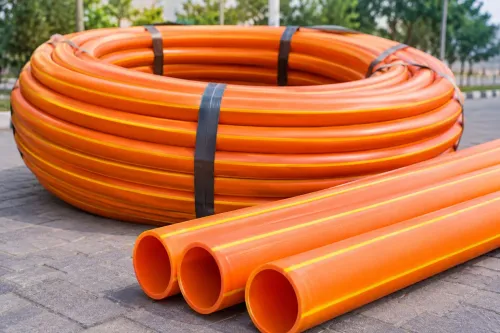
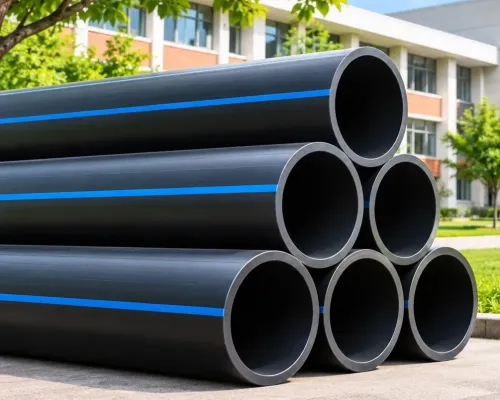
Accept PLB only against a project-approved railway duct specification, not a generic HDPE or water-pipe certificate. Record both outside and usable inside diameters: a 40/33 designation means approximately 40 mm outside and 33 mm inside, but verify wall tolerance, ovality and actual bore. The wrong bore increases pulling tension and leaves no practical replacement path.
| Application | Installation method to verify | Evidence required |
|---|---|---|
| Direct burial | Sand bedding, specified cover, warning tape, sealed couplers and drainage | PE grade, wall thickness, crush load and deflection test, bend radius, dimensional report |
| Concrete encasement | Approved concrete mix, separation from power cables, expansion and entry details | Encasement drawing, duct spacing, joint compatibility and cured-concrete protection |
| Road crossing | Concrete encasement, casing or protection slab where cover is inadequate | Road-owner and railway approval, traffic-load/crush test and reinstatement detail |
| HDD | Continuous length or approved couplers, minimum bore radius and controlled pulling tension | Tensile rating, pull-back calculation, lubrication data, bend radius and HDD method statement |
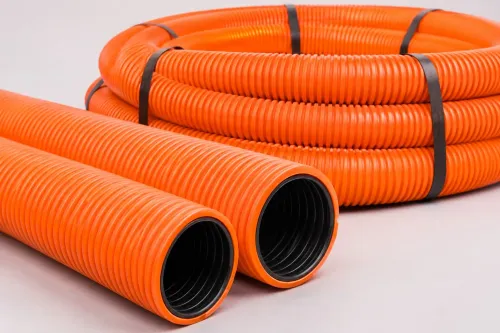
Ask for the material grade, batch traceability, inner-friction or pre-lubrication report, UV storage limit, temperature range, jointing instructions and the manufacturer’s minimum bend radius. A tight bend can flatten the bore even when the pipe passes a static crush test.
Before purchase, obtain the current RDSO or railway-owner specification number and amendment, approved vendor status where required, type-test and routine-test reports, quality-assurance plan, material certificates, inspection-and-test plan, and written acceptance for the route. TATFLOW can be compared on these documents rather than on the product name alone.
Missing evidence is a warning sign in plb telecom duct problems.
Related product
 | PLB DUCT pipe for Railway Signal & Telecom Ducting TATFLOW PLB DUCT pipe for Railway Signal & Telecom Ducting TATFLOW PLB Duct Pipe is a high-quality ducting solution designed for the safe and efficient installation and protection of Railway Signal,... View product → |
Should You Clean the Existing Duct or Install a New Route?
Choose the least disruptive remedy that restores a continuous, structurally sound pathway; do not pull a new duct through an occupied or damaged duct. Confirm the route, occupancy, internal diameter, blockage position and cross-section before disturbing a live signalling or communications system.
| Option | What it means | When it applies |
|---|---|---|
| Rodding | Push a rod or mandrel through the route to locate resistance and verify continuity. | Use first when the blockage location or route condition is unknown. |
| Cleaning | Remove silt, mud or loose debris with a brush, swab or controlled air-and-water method. | Use when the duct remains round and the obstruction is removable without damaging cables. |
| Section replacement | Excavate and replace one crushed, split or failed-joint section, then reconnect and protect it. | Choose this when tests isolate a local defect and the rest of the route passes inspection. |
| Parallel duct | Install a separate route beside the existing one, leaving the old route in service or abandoning it safely. | Use when the existing duct is repeatedly blocked, occupied, undersized or too risky to repair. |
| HDD crossing | Bore a new protected route beneath a road, trackside obstacle or utility crossing. | Use where open excavation would disrupt traffic, railway assets or buried services, subject to railway approval. |
For railway telecom duct replacement in Nagpur, select parallel ducting when outage risk outweighs excavation cost. Select HDD for a crossing, not as a substitute for route planning. Confirm cover, casing or concrete protection, chamber drainage and separation before reinstatement; a PLB duct cannot correct a sharp bend, flooded chamber or poor joint.
How Do You Prove the New or Repaired Duct Is Ready?
Approve the duct only after it passes physical, access and documentation checks. That acceptance record matters for railway signal duct protection nagpur work because a clear bore can still flood, collapse or lose its draw rope before cable installation.
- Run the approved mandrel through the full duct length, then pull a duct-brush to remove silt and prove that no sharp obstruction remains. Record the mandrel size, direction and result.
- Leave a continuous draw-rope or messenger secured at both ends, with its size and identification recorded. Do not accept a loose rope lying in a chamber.
- Inspect every chamber for correct location, clean walls, drainage, safe cover seating and enough working space. Remove mud and standing water.
- Check each joint for full insertion, alignment, locked couplers and no visible gap. Reject a joint that moves when the duct is pulled by hand.
- Fit caps or approved end seals at both ends and at every unused branch. An open duct can pass a mandrel today and fill with monsoon water or silt tomorrow.
- Record route coordinates, chamber chainage, duct size, depth, crossings, joint locations, spare ducts and photographs in the as-built route record.
| Check | Signalling route | Telecom route |
|---|---|---|
| Cable pathway | Confirm separation from power and other signalling circuits | Confirm bend control and pulling or blowing access |
| Acceptance evidence | Add railway inspection and circuit-specific requirements | Add duct continuity, rope and cable-installation records |
| Spare capacity | Cap and identify each spare duct | Protect the spare rope and record its chamber access |
This evidence is essential before approving a plb duct pipe for railway signal problems nagpur installation. PLB reduces friction and blockage risk; it cannot correct poor drainage, inadequate cover or a route that violates signalling separation requirements.
Frequently asked questions
Which railway duct problems must you diagnose first?
Trace the route, inspect chambers and crossings, confirm occupancy, and test continuity with a draw rope and calibrated mandrel before specifying a new PLB duct.
How should a protected railway signal duct route be built?
Record the route, separate signalling and telecom circuits where required, protect crossings and chambers, and prevent sharp bends, crushing, and water ingress.
Which PLB specifications and installation methods are acceptable?
Check the project specification for duct diameter, pressure class, wall construction, bend radius, jointing method, pulling tension, and manufacturer test records before installation.
Should you clean the existing duct or install a new route?
Clean the existing duct when it remains structurally sound and passes the mandrel and draw-rope tests; replace it when crushing, collapse, severe blockage, or unsafe occupancy prevents reliable cable pulling.
How do you prove the new or repaired duct is ready?
Record route inspections, chamber condition, mandrel passage, draw-rope installation, cleaning results, duct sealing, photographs, and test documents in the handover file.
Keywords