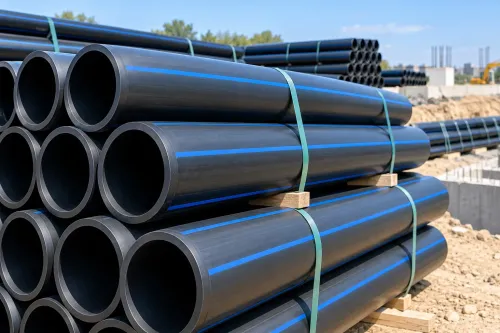
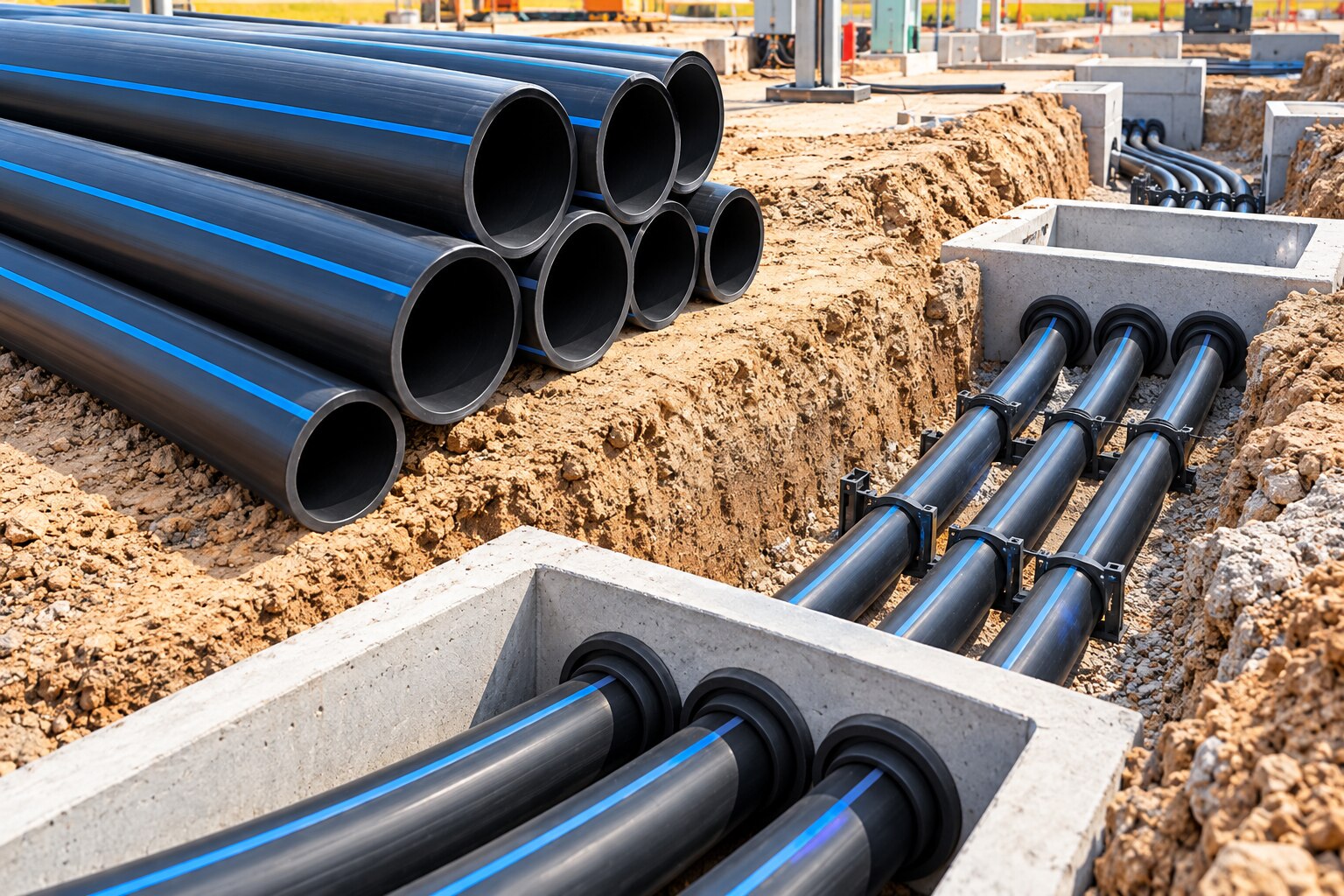
Choosing an HDPE duct for a Nagpur cable route requires more than matching a nominal pipe diameter to the cable. You will be able to define the duct specification, select the right installation method, plan an HDD pullback, and verify the finished route before cables enter it.
Key takeaways
- Calculate cable envelope, bend clearance and pulling load before selecting duct diameter.
- Specify outside diameter, wall thickness, SDR, material grade and test requirements.
- Account for Nagpur’s soil, monsoon water, traffic loads and thermal conditions.
- Use a swivel, rated pulling head and controlled pull tension during HDD installation.
How to size an HDPE duct for the cable route
Calculate the cable envelope, pulling load and burial loads before choosing an HDPE duct. A catalogue diameter alone can leave the cable jammed at a bend, overstress its sheath or collapse under traffic.
1. Record each cable’s outside diameter, weight per metre, minimum bending radius, allowable pulling tension and installation temperature. Add the number of cables, whether they will be pulled individually or as a bundle, and the number of future cables required.
2. Calculate the required internal diameter from the actual cable arrangement and heat-dissipation needs. Do not apply the familiar 40% raceway-fill figure automatically; that value belongs to specific electrical-code conditions, not every utility duct route.
3. Measure route length, bend count, bend radius, entry and exit elevations, and expected sidewall pressure. Use these figures with cable weight, friction, lubricant compatibility and draw-rope strength to calculate pulling tension. Smooth HDPE reduces friction but does not remove this calculation.
4. Set the duct’s minimum wall thickness or SDR/DR from burial depth, soil loading, groundwater, road or rail crossings, installation method and crushing risk. Direct burial and HDD pullback can impose different loads.
5. Define the required bend radius, allowable pulling tension, jointing method, delivery length, spare capacity and closure against silt and water.
For an HDPE electrical duct pipe in Nagpur, give the supplier this route calculation rather than asking for “electrical duct” alone. The specification must then identify internal diameter, wall thickness, crush and impact performance, and draw-rope requirements.
Which dimensions, SDR and standards belong in the purchase specification
A purchase order must define the duct’s bore and installation performance, not merely call for “HDPE.” For a tatflow electrical ducting pipe, state the nominal outside diameter, minimum internal diameter, minimum wall thickness, SDR or DR, delivery length, polyethylene grade, and spare-duct requirement.
| Feature | Electrical duct specification | Generic water-pipe specification |
|---|---|---|
| Internal bore | State the minimum usable internal diameter for the cable, rope and mandrel | Outside diameter and pressure class may be the main dimensions |
| Wall and SDR | Specify minimum wall thickness, SDR/DR and crush resistance for burial or HDD loads | Pressure rating alone does not prove cable-pulling performance |
| Route performance | Record allowable pulling tension, minimum bend radius, impact resistance and temporary pullback loads | Hydrostatic pressure performance is the usual focus |
| Identification | Require colour or stripe convention, permanent size and SDR marking, batch number and manufacturer traceability | Colour alone identifies neither use nor compliance |
| Joints and ends | Define butt-fusion rules, internal bead removal, bore verification and caps against silt and water | Joint requirements may not address cable access |
| Evidence | Require dimensional, impact, crush, fusion and material test reports | A water-pipe certificate alone is insufficient |
Cite IS 14930 for polyethylene pipes used in underground cable ducting, identifying the exact part, edition, construction and test reports. A reference to IS 4984, the water-supply pipe standard, does not establish cable-duct compliance. Also state UV stabilisation for exposed storage and whether the supplied lengths suit trench work or HDD strings.
For HDD, never derive allowable pull force from resin tensile strength; obtain the product-specific value for the selected SDR.
How Nagpur ground and installation conditions change the design
A Nagpur route suits open trench, direct burial or HDD only after the soil, load and installation forces are checked against the duct specification. Black cotton soil can swell and shrink, while monsoon water can soften trench walls and wash fines from bedding; traffic routes add temporary and permanent surface loads.
Use the installation method that matches these conditions:
- Open trench: Select it where excavation can be safely supported and the trench allows uniform bedding, side support and controlled backfill. Remove sharp stones, cap the duct ends, and compact backfill in layers. Poor side support can deform HDPE even when its wall thickness is correct.
- Direct burial: Use it only after confirming cover depth, groundwater, soil movement, construction compaction and traffic loading. Specify crush resistance and impact resistance separately, rather than assuming a thicker-looking pipe is adequate.
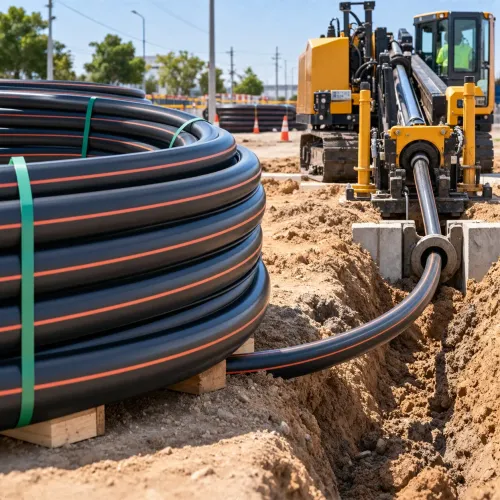
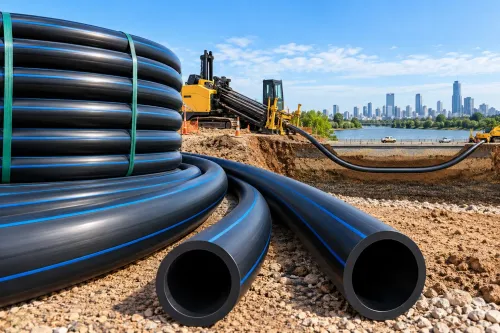
- HDD: Use it where surface disruption or crossings rule out excavation. Check entry and exit angles, bore diameter, bend radius, drilling-fluid compatibility, buoyancy, pullback tension and temporary loads. Do not estimate allowable pull force from HDPE resin tensile strength; use the product- and SDR-specific value.
For tatflow hdpe pipes for underground electrical cable routes nagpur, record internal diameter, minimum wall thickness or SDR, allowable pulling tension, jointing method and delivery length in the purchase specification. Butt-fusion suits long pulls only when the internal bead is removed or verified clear.
Clean the bore, control cable sidewall pressure and protect the draw rope; low-friction HDPE does not remove pulling-tension limits.
How to plan and execute an HDD electrical duct pullback
Control the pullback before the drill enters the ground. A duct that survives joining can still buckle, exceed its allowable tensile load or arrive with silt inside.
- Survey the route for utilities, road crossings, entry and exit pits, ground levels and drilling-fluid disposal. Record the planned bore depth, minimum bend radius, crossing length and entry angle.
- Approve the pilot-bore and reaming plan against the duct’s outside diameter, SDR-specific allowable pull force, bend radius, buoyancy and temporary loads. Do not use HDPE resin tensile strength as the pull limit.
- Join duct lengths with a documented butt-fusion procedure. Check the operator’s qualification, heating parameters, alignment and cooling time; specify internal bead removal when the bead could restrict cable passage.
- Clean, cap and protect the duct string before pullback. Keep drilling fluid, soil and water out of the bore, and attach a swivel or pulling head that prevents twisting.
- Pull at a controlled speed while recording force and stopping if tension, bending or entry geometry exceeds the approved limits. Do not drag the duct over sharp edges or exceed its minimum bend radius.
- After pullback, install a correctly rated draw rope, secure both ends and cap the duct. Pass a mandrel sized to the effective bore, then record the mandrel result and rope condition before cable installation.
Ask an hdd electrical duct supplier nagpur for the fusion procedure, pullback calculation, bend-radius and tensile data, mandrel records and comparable crossing references.
How to inspect the duct and evaluate a Nagpur supplier
Accept the duct only when physical tests and traceable records agree. A catalogue photograph cannot prove that an installed route is clear, undamaged or ready for cable pulling.
1. Inspect exposed duct before backfilling. Reject deep gouges, kinks, flattened sections, cracked ends, contaminated interiors and fusion joints with visible misalignment or excessive internal bead.
2. Pass the specified mandrel through the complete route, including every joint and bend. Record mandrel diameter, route length, pulling force and result; a short sample test does not prove bore continuity.
3. Confirm that the draw rope runs continuously from end to end, has the specified strength, and remains secured. Check that both duct ends are capped against silt and water after testing.
4. Match delivery markings to the purchase order: nominal outside diameter, SDR or DR, colour or stripe, permanent manufacturer marking, batch number and production date. Request the actual test reports, not a statement that the material is “electrical grade.”
5. Ask the hdd electrical duct supplier nagpur for the fusion procedure, operator qualification, jointing and duct-length plan, pullback calculation, allowable tension, bend-radius data and comparable crossing references. Verify that the submission identifies the exact IS 14930 part and edition; IS 4984 alone proves water-pipe compliance, not cable-duct suitability.
For a Tatflow electrical ducting pipe, use the same evidence threshold: product name does not replace project records. Missing batch traceability, mandrel results or pullback calculations is a procurement risk, even when the installed duct looks clean.
Related products
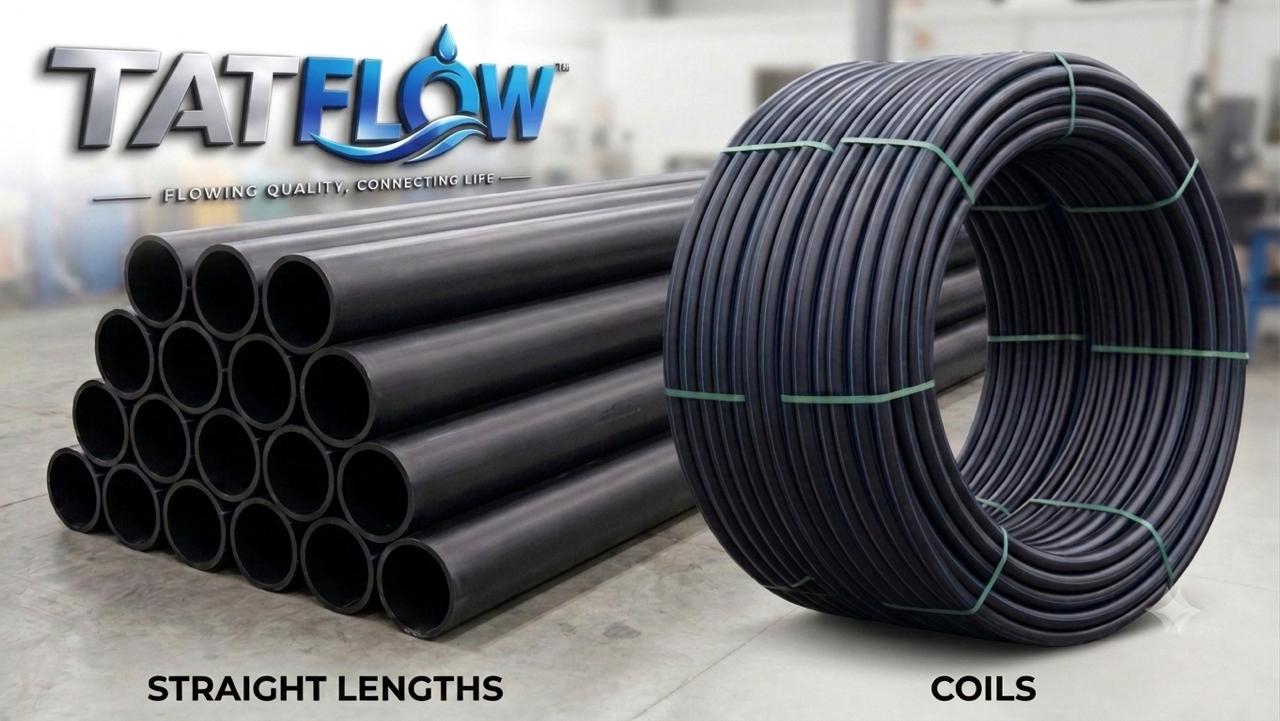 | TATFLOW HDPE Pipe for Electrical Ducting Solutions (HDD Application) TATFLOW HDPE Pipe for Electrical Ducting Solutions (HDD Application) TATFLOW HDPE Pipe for Electrical Ducting Solutions (HDD Application) Reliable HDPE Ducting for Modern Electrical Infrastructure TATFLOW HDPE Pipes... View product → |
 | HDPE DUCT Pipes for HDD Applications HDPE DUCT Pipes for HDD Applications Reliable HDPE Ducting for Modern Electrical Infrastructure TATFLOW HDPE Pipes for Electrical Ducting are designed to provide a reliable, durable and... View product → |
Frequently asked questions
How do you size an HDPE duct for an underground electrical cable route?
Measure the cable envelope, add clearance for installation and future access, then check bend radius, pulling tension and sidewall pressure at every bend. Confirm the selected duct also withstands burial and traffic loads.
Which dimensions, SDR and standards belong in an HDPE duct purchase specification?
State nominal outside diameter, minimum wall thickness, SDR, length, colour, resin grade, ovality tolerance, jointing method and delivery form. Name the required inspection tests and standards, such as IS 4984 where applicable, instead of accepting an unspecified catalogue grade.
How do Nagpur ground conditions affect underground electrical duct design?
Investigate soil type, groundwater, monsoon saturation, road loading and local temperature exposure. Use suitable bedding, controlled backfill and cover depth, and account for buoyancy or trench instability where groundwater is present.
How should you plan an HDD pullback for an electrical duct?
Survey the alignment, verify bore diameter and bend radius, select drilling fluid, attach a swivel and pulling head, then control pull force and rotation during installation. Record drilling fluid, pull tension, duct length and post-installation inspection results.
Keywords