Choosing a duct for horizontal directional drilling is not a diameter-only decision: pullback force, bore curvature, soil conditions, drilling fluid, cable clearance and joint behaviour all affect the result. By the end, you will be able to compare HDPE with PVC, steel, PE-lined steel, concrete and vitrified clay, then specify and verify a duct against the actual Nagpur bore design.
Key takeaways
- Use a flexible HDPE duct when the bore requires controlled bending and pullback.
- Choose duct diameter from cable fill, bend radius and pulling equipment—not cable count alone.
- Request resin, pressure, dimensional and batch records before accepting an HDD duct.
- Check drilling-fluid pressure, groundwater and surface-return risks before boring in Nagpur.
How an HDPE duct travels through an HDD bore
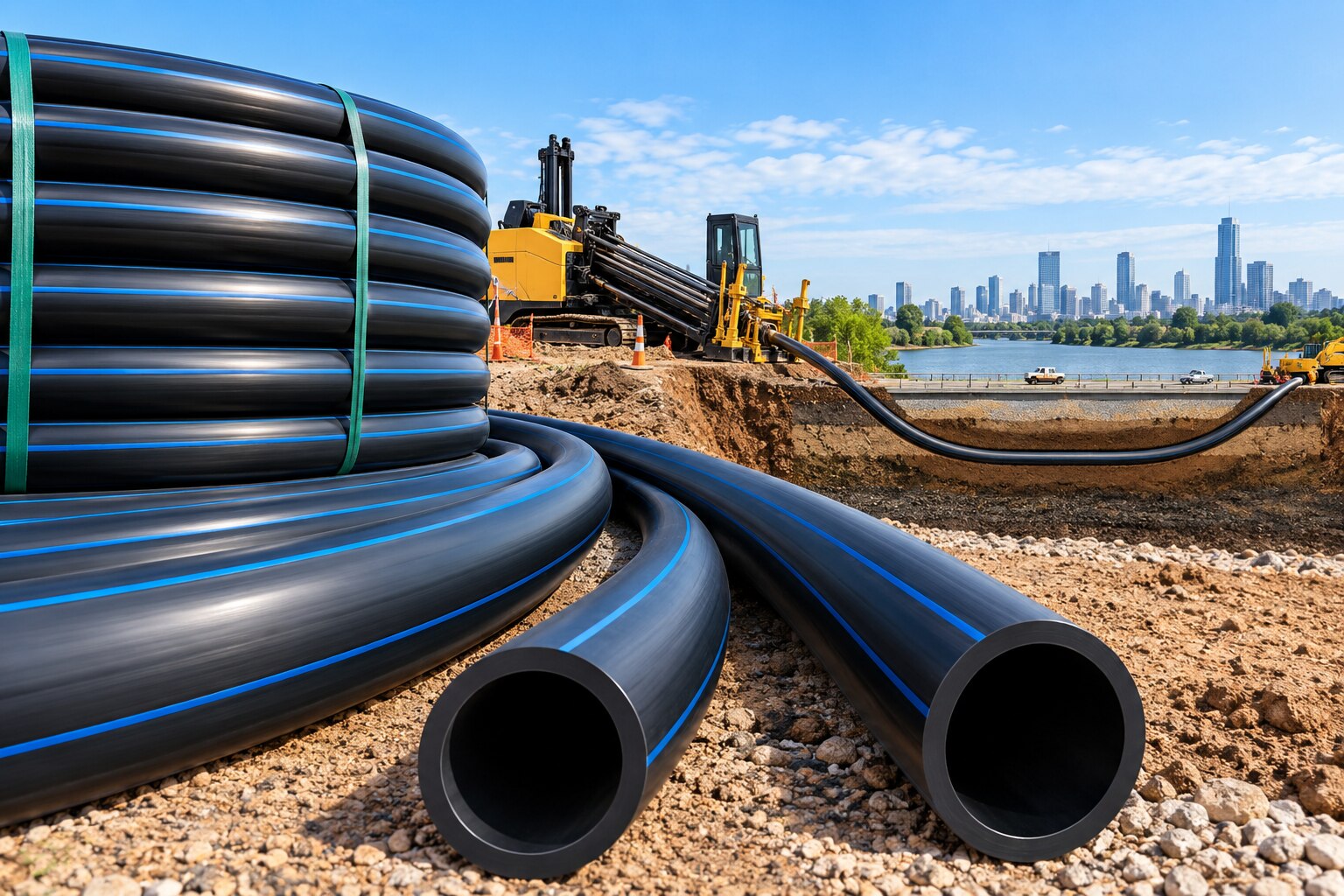
A pilot bore establishes the route; it does not carry the duct. A steerable drill head advances through the ground while drilling fluid cools the tool, carries cuttings and supports the hole. The crew records depth, alignment and drilling-fluid pressure because excessive pressure can cause surface returns.
1. Pilot boring: The drill head follows the planned line and minimum radius. Soil changes, inadvertent voids or a tight curve can alter the final pullback path.
2. Reaming: Reamers enlarge and clean the pilot hole to provide annular clearance around the duct. Inadequate cleaning or insufficient clearance increases friction and pullback force, while an oversized or unstable bore can leave the duct poorly supported.
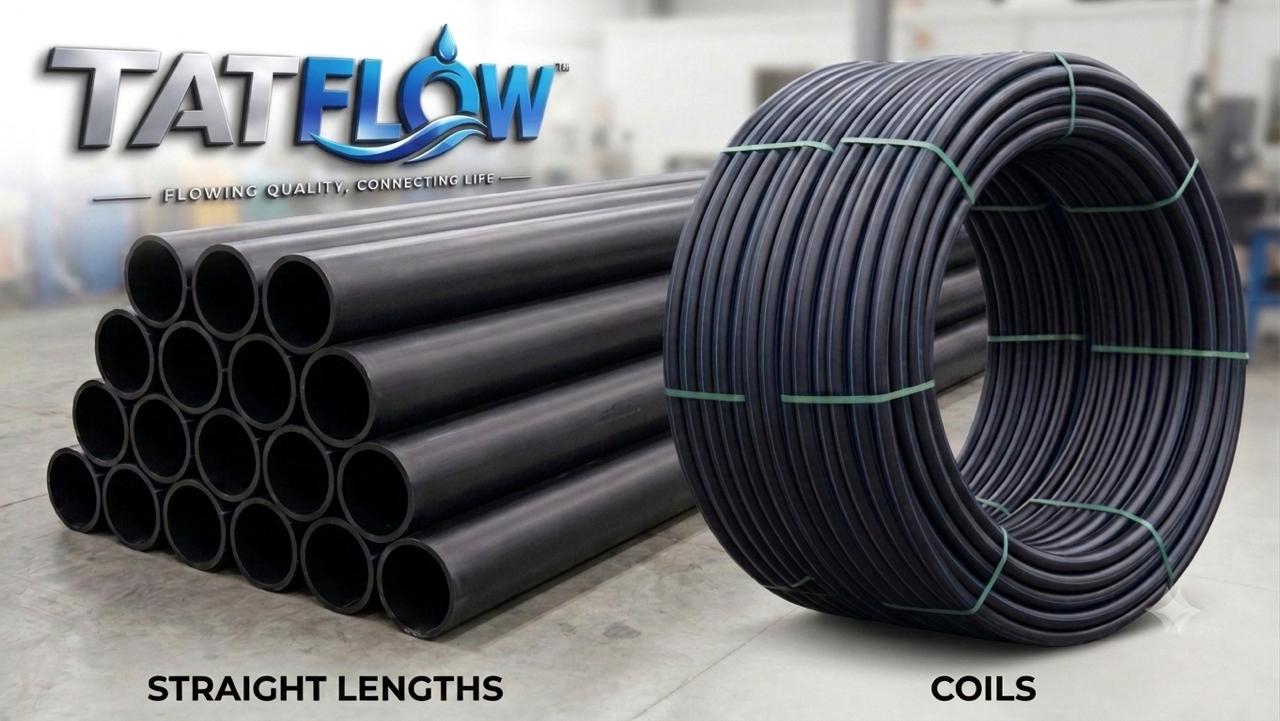
3. Pullback: The duct is connected behind the reamer through a swivel and pulled into the fluid-filled bore. hdpe ducting for trenchless installation is commonly supplied as a continuous butt-fused string, avoiding regularly spaced joints that could separate.
The operator still controls tensile load, bend radius, buoyancy and drilling-fluid conditions; ASTM F1962 addresses these installation loads, including tension, bending, hydrostatic pressure and collapse.
4. Cable installation: After the duct reaches its endpoint, inspect and clean it, confirm continuity with a mandrel, and install a pulling rope or winch line. Pull the cable within its tension and bend-radius limits, leaving planned spare capacity.
A hdd duct pipe nagpur specification must use the exact duct’s SDR, PE grade, temperature and temporary bend-radius limits, not a generic rule.
HDPE versus PVC, steel and rigid conduits
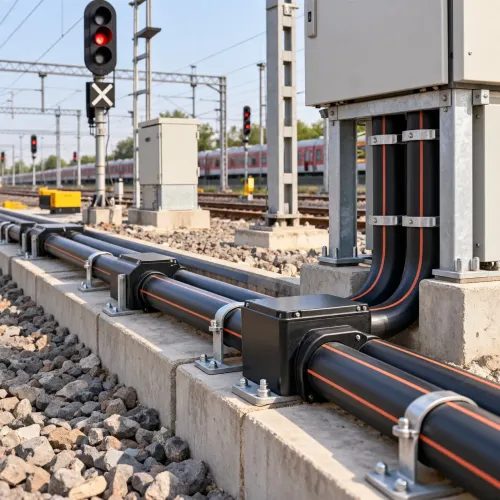
HDPE is usually the strongest starting choice for an HDD route because it bends through the bore as one continuous, butt-fused string. That continuity removes regularly spaced mechanical joints, reducing joint separation during pullback. It does not remove the need to control tensile load, curvature, buoyancy or drilling-fluid pressure.
| Option | Flexibility and joints | Stiffness and pullback | Corrosion and logistics |
|---|---|---|---|
| HDPE | Flexible; butt-fused continuous string | Lower stiffness than steel; select SDR and tensile limit carefully | Corrosion-resistant; needs fusion space, laydown length and traffic control |
| PVC | Less tolerant of bending and point loads; socket, gasketed or solvent-cemented joints | Joint separation and cracking risk increase during pulling | Light, but repeated handling and joint assembly complicate HDD |
| Steel | Rigid; welded or mechanical joints require inspection | Highest stiffness and tensile capacity; handles severe loads better | Needs corrosion protection; heavier transport, lifting and welding |
| Concrete or vitrified clay | Rigid, jointed sections; poor fit for ordinary pullback | Resists compression but is not a flexible pullback string | Durable in open trench; installation demands specialised trenchless equipment |
A lower SDR means a thicker HDPE wall, improving resistance to deformation and installation damage. It also increases weight, cost and pulling load, so the lowest SDR is not automatically correct.
For Nagpur streets, compare the fusion-string footprint with the shorter-section handling of rigid conduits. Confirm the choice against bore-specific ground data: black-cotton soil, fill, weathered rock and hard inclusions can change pullback forces more than the material label. This hdd pipe comparison is incomplete without the bore profile, traffic plan and laydown area.
How to size the duct for cables, bends and pullback
Choose the duct’s inside diameter from the cable outside diameters, pulling method and expansion plan—not from nominal pipe size alone. Leave clearance for pulling tension, friction and future cables; a tightly packed duct increases jamming risk and makes replacement difficult.
Specify these values before approving an HDPE duct pipe HDD for Nagpur comparison:
- Outside diameter, wall thickness and SDR: lower SDR means a thicker wall and greater resistance to ovalisation and collapse, but reduces internal diameter.
- Cable arrangement: calculate occupied area, minimum cable bend radius and spare capacity for additional cables or a draw rope.
- Pullback design: use ASTM F1962 methods to check tensile load, bore curvature, soil and drilling-fluid friction, buoyancy and allowable PE stress.
- Bend and damage limits: obtain the exact minimum installation and service radius, ovality tolerance, crush resistance, PE grade and drilling-fluid compatibility.
The stated bend radius is not universal; it changes with diameter, SDR, temperature and temporary versus permanent bending.
| Option | Sizing basis | Installation consequence |
|---|---|---|
| HDPE duct | ID, SDR, tensile limit, ovality and radius | Butt-fused continuous strings reduce joint separation, but require controlled pullback and laydown space |
| PVC or rigid duct | ID, joint strength and bending limits | Short sections add joints and resist curved bores |
| Steel pipe | ID, wall thickness, buckling and tensile capacity | High strength suits severe loads, but weight, corrosion protection and handling increase |
A Nagpur site comparison must include the fusion footprint and traffic control, not only material price.
Standards, records and supplier checks before procurement
Do not accept resin grade and outside diameter as proof that a duct suits HDD. An HDPE duct pipe supplier Nagpur should identify the exact SDR, internal diameter, PE grade, ovality limit and allowable tensile load for your route.
ASTM F1962 calculations must address bore radius, friction, buoyancy, bending, collapse and allowable pullback stress; ISO 4427 water-pipe compliance does not establish cable-duct performance.
1. Require a product data sheet, dimensional inspection report, resin batch certificate, manufacturing date, batch number and continuous-length traceability. Specify tests for wall thickness, outside and inside diameter, ovality, impact resistance, crush resistance and draw-rope continuity.
2. Require the qualified butt-fusion procedure, operator qualifications and heater calibration record. The procedure must control facing, heater temperature, alignment, bead formation, joining pressure and cooling time; inspect every joint for uniform beads, clean fusion faces and damage.
3. Put the exact temporary and permanent bend radii on the drawings. The supplier must calculate them for that diameter, SDR, temperature and PE grade instead of applying a generic rule.
4. Require a field acceptance form covering bore cleaning, mandrel passage, duct end sealing, draw-rope installation, joint locations, pullback tension, lubrication, as-built depth and GPS or chainage. TATFLOW can be assessed against this evidence rather than catalogue wording.
Reject delivery with missing batch identification, damaged ends, excessive ovality or no documented acceptance method.
Related products
 | HDPE DUCT Pipes for HDD Applications HDPE DUCT Pipes for HDD Applications Reliable HDPE Ducting for Modern Electrical Infrastructure TATFLOW HDPE Pipes for Electrical Ducting are designed to provide a reliable, durable and... View product → |
 | TATFLOW HDPE Pipe for Electrical Ducting Solutions (HDD Application) TATFLOW HDPE Pipe for Electrical Ducting Solutions (HDD Application) TATFLOW HDPE Pipe for Electrical Ducting Solutions (HDD Application) Reliable HDPE Ducting for Modern Electrical Infrastructure TATFLOW HDPE Pipes... View product → |
Making the choice for Nagpur ground and site constraints
Choose the material only after the bore profile, pullback calculation and worksite plan agree. In Nagpur, black-cotton soil, imported fill, weathered rock and hard inclusions can change drilling-fluid pressure and friction along one alignment.
A useful hdd pipe comparison therefore uses the geotechnical report, bore radius and ASTM F1962 tensile, bending, buoyancy and collapse checks—not nominal pressure class alone.
| Option | Ground and site signal | Installation and cable decision |
|---|---|---|
| HDPE | Variable soil with manageable curvature | Select a continuous butt-fused string when fusion space, laydown length and traffic control are available; verify allowable tensile load and bending radius. |
| Steel | Hard inclusions, severe external loading or a high-strength crossing | Use when calculated loads exceed the HDPE design, accepting heavier handling, corrosion protection and more difficult joints. |
| Multi-duct | Several telecom routes with staged capacity | Choose smaller subducts or a factory bundle when spare capacity and cable segregation matter; check the bundle’s actual outside diameter and bending behaviour. |
For an hdd duct pipe nagpur project, map the fusion-string footprint against lane closures, intersections and property access before approving HDPE.
Then match the duct to cable count, pulling tension, minimum bend radius and future spares; a larger single duct simplifies the bore, while multi-duct improves segregation and repairability but can increase bore diameter and friction.
Frequently asked questions
How does an HDPE duct travel through an HDD bore?
The crew drills a pilot bore, enlarges it with reaming tools, then attaches the duct to a swivel and pulls it through with drilling fluid supporting the bore. Depth, alignment, pulling load and fluid pressure must be recorded during the operation.
How does HDPE compare with PVC and steel conduit for HDD?
HDPE provides flexibility, fusion-welded joints and resistance to handling damage. PVC is rigid and depends on solvent or mechanical joints, while steel offers high strength but adds weight, corrosion protection and handling demands. Compare bend radius, pullback load, joint design and ground conditions before choosing.
How do you size an HDPE duct for cables and HDD pullback?
Check the cable manufacturer’s minimum bend radius, calculate the cable bundle’s occupied area, allow installation clearance, and verify the duct’s tensile rating against predicted pullback load. Confirm that the selected duct and cable fit the reamed bore and entry and exit bends.
What should you check with an HDPE duct supplier in Nagpur?
Request the product standard, resin grade, outside diameter and wall thickness, batch number, dimensional inspection results, pressure or tensile test records, fusion guidance and traceability documents. Inspect the coil or pipe for gouges, flattening, contamination and damaged ends before installation.
Keywords