Railway telecom ducting fails when cable routes, duct dimensions, crossings and sealing details are treated as separate decisions. By the end, you will know how to specify the duct, prepare a Nagpur route, install and test it, and verify the documents needed before cables enter the system.
Key takeaways
- Separate signalling, telecom, power and earthing routes.
- Size the duct from cable outside diameter and bend requirements.
- Join and test the empty duct before pulling cable.
- Check railway approvals, test records and supplier traceability.
Design the railway route around cable function and segregation
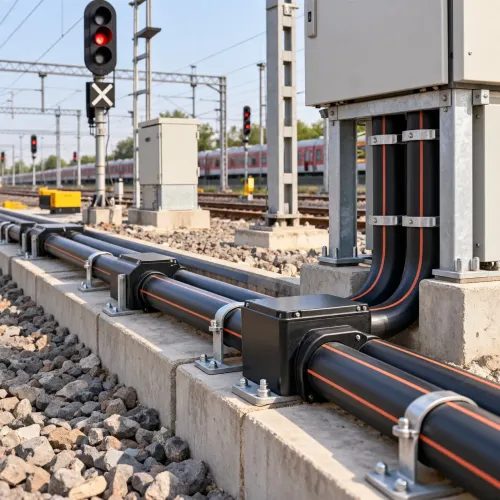
Keep signalling, telecom/OFC, power, and earthing routes separate. A railway signal duct pipe in Nagpur must follow the approved signalling and telecommunications design; fitting several cable types into one PLB duct is not a safe substitute for segregation.
Power cables can induce interference in signalling and communication circuits, while a shared route makes fault isolation and future maintenance harder.
Plan the route before excavation:
- Obtain the approved S&T drawings and mark chainage, equipment rooms, signal locations, chambers, level crossings, bridges, and cable termination points.
- Walk the alignment and locate existing utilities with records, surface markers, and trial pits where records are uncertain.
- Fix duct corridors, separation distances, crossing angles, spare ducts, chamber positions, bend limits, and access points before setting out the trench.
- Detail every road, drain, culvert, and track crossing; do not leave crossing depth or HDD entry and exit points to the excavation crew.
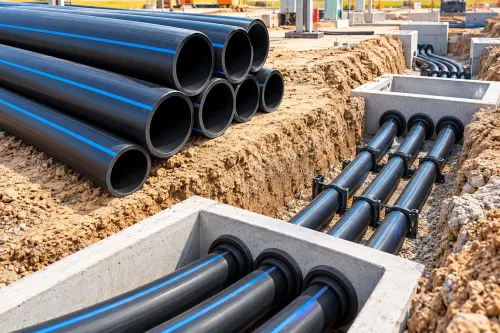
- Specify compatible couplers, end caps, and chamber seals. Nagpur’s monsoon silt and standing water can enter an open duct before cable pulling.
| Cable group | Separate route decision | Planning consequence |
|---|---|---|
| Signalling | Dedicated duct or approved signalling group | Protect interlocking and train-detection circuits from interference. |
| Telecom/OFC | Dedicated telecom duct | Preserve fibre bend radius and maintenance access. |
| Power and earthing | Independent route | Prevent induced voltage, fault-current, and electromagnetic problems. |
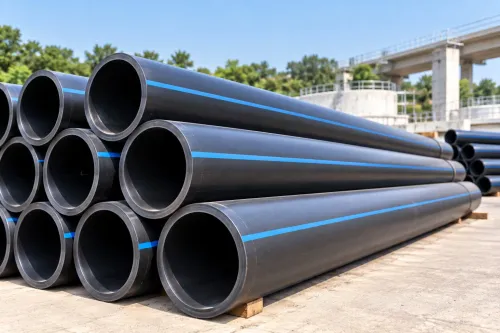
Treat PLB as a low-friction HDPE telecom duct, not a water pipe. Mark each route with duct size, function, and spare capacity, then keep coils capped and shielded from unnecessary sunlight until burial.
Select the duct size from cable geometry, not the nominal name
Choose the duct from the cable’s outside diameter and installation method, not from “40 mm” alone. A 40/33 designation normally means about 40 mm outside diameter and 33 mm inside diameter; the 33 mm bore is the dimension that must accept the cable, connector strategy and required spare capacity.
Measure the cable or cable bundle, then check its minimum bend radius, allowable pulling tension and the route’s sharpest bend. Confirm the duct’s internal diameter, wall thickness, minimum bend radius, crush and impact ratings against the approved design.
Do not put signalling, OFC, telecom, power or earthing cables in one duct merely because they fit; segregation remains a railway design decision.
| Installation method | Construction evidence to confirm | Main sizing concern |
|---|---|---|
| Pulling with a rope or rod | Smooth, continuous bore; low-friction inner layer; declared friction performance if specified; pulling-tension compatibility | Cable tension, sidewall pressure and bend radius |
| Blowing or jetting fibre | Clean, uniform bore; sealed joints; inner surface compatible with the cable and air method | Bore clearance, air leakage and cable-to-duct ratio |
| Multiple cables or a sub-duct | Internal diameter and occupancy calculation; manufacturer approval for the bundle | Remaining space, added friction and future maintenance |
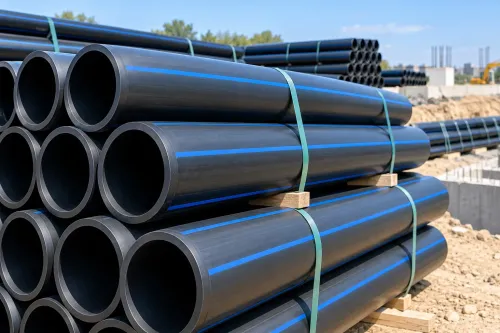
For a telecom duct pipe Nagpur project, require a sample or drawing showing actual inside and outside diameters. Accept coils only with traceable marking for size, material, manufacturer or batch and production information; unmarked duct makes corridor-wide fault investigation guesswork. Verify the PLB construction, rather than assuming the label alone proves suitability.
Lay, join and test the duct before pulling cable
A railway telecom duct is ready for cable only after it passes a continuous route, mandrel, draw-rope and joint inspection. Visual inspection alone cannot prove that a fibre, signalling or communication cable will pass without damage.
1. Confirm the approved route and segregation before laying. Mark each duct for signalling, telecom/OFC, power-associated and earthing services; do not combine cables merely because they fit.
2. Prepare the trench, bore or crossing, remove sharp stones, and maintain the specified cover and bend radius. For HDD, compare the bore curvature and calculated pulling load with the duct’s installation bend radius and allowable deformation.
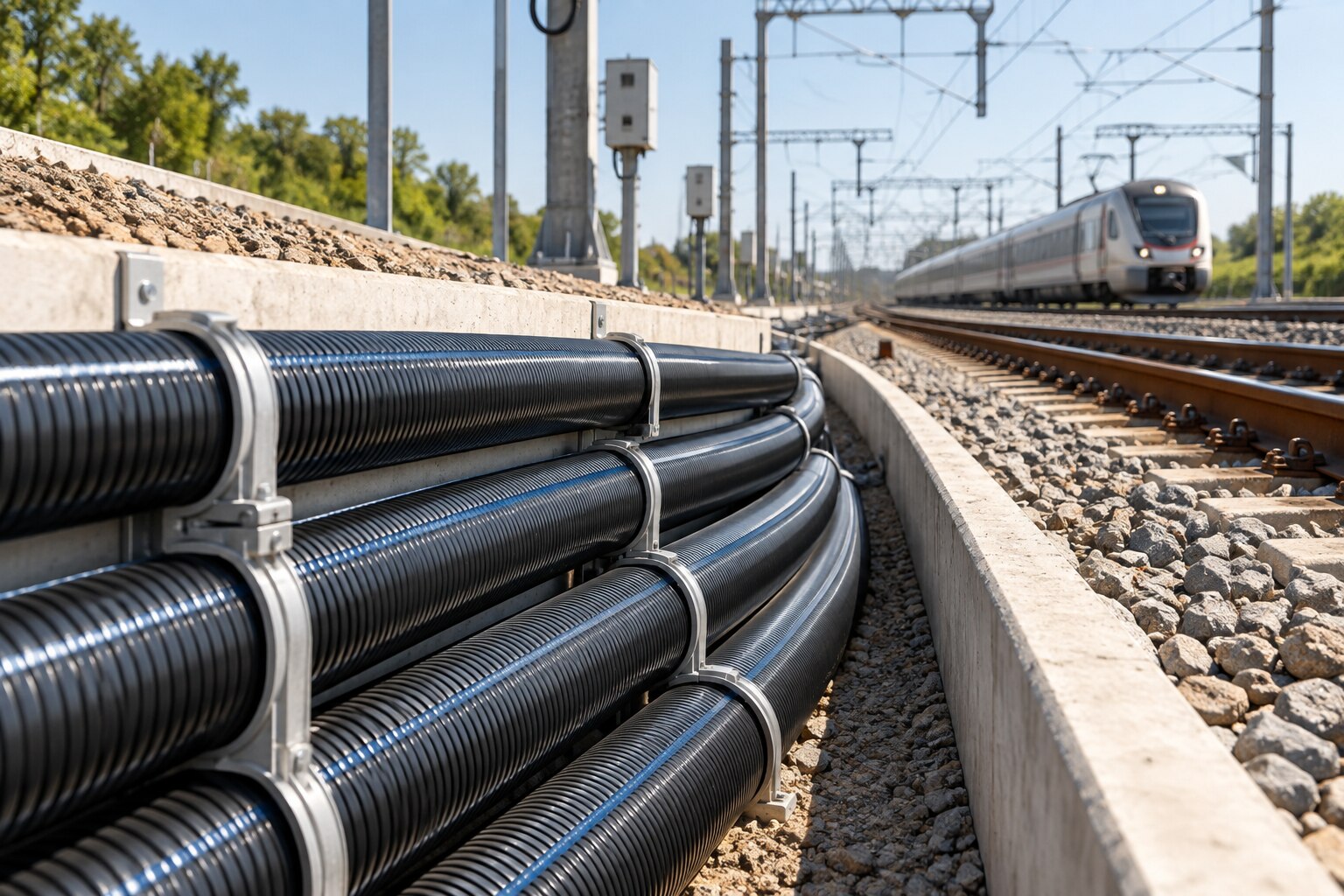
3. Lay the PLB duct without kinks, flattening or sharp bends. Record reel numbers, route markers, joint locations and spare ducts at both ends.
4. Join sections using the specified couplers, then protect each joint against soil and water entry. Cap unused ducts immediately.
5. Pass a mandrel sized for the installed inside diameter through the complete route. A mandrel that stops, binds or emerges damaged identifies a restriction; repair it and repeat the test.
6. Rod the accepted duct and verify that the draw rope is continuous, secured at both ends and rated for the planned pulling load. Inspect chambers, duct mouths and entry seals.
7. Apply the contract’s inspection or pressure test where required, record results, and release the route for cable pulling only after every test passes. The PLB lubricating layer lowers friction; it does not permit over-pulling, crushing or a damaged bore. Seal cable ends after installation.
Adapt the installation to Nagpur soil, weather and railway crossings
Nagpur’s monsoon water and expansive black-cotton soil demand firm trench bottoms, controlled backfill and sealed duct ends. Excavate to the approved railway depth, remove soft pockets, add specified bedding, and compact selected backfill in layers; an unsupported duct can deform when saturated soil dries and shrinks.
Change the method at each railway feature:
- Open trench: keep the trench narrow, maintain safe clearance from the track formation, and prevent rainwater entering open duct ends. Use compatible couplers, end caps and chamber seals.
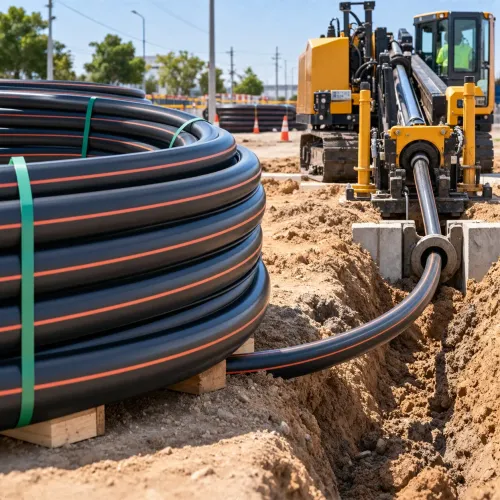
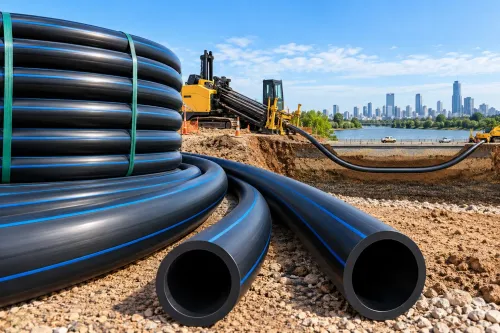
- HDD crossing: calculate pulling load, bore curvature, installation bend radius and allowable duct deformation before drilling. Swab the bore, control drilling fluid, protect the duct from sharp inclusions, and cap it immediately. The low-friction inner layer in PLB duct pipe for railways reduces cable friction later; it does not permit over-pulling or crushing.
- Bridge approach: use the approved sleeve, casing or protected transition through the abutment zone. Provide a controlled bend and allowance for settlement rather than forcing the duct against concrete or a sharp edge.
- Level crossing: use the railway-approved crossing detail, with casing or increased mechanical protection where specified. Complete the crossing in a possession or traffic-block window and test continuity before reopening it.
- Station work: coordinate chambers, platforms, signal locations and drainage before excavation. Keep spare routes and access points outside passenger paths, and shield above-ground sections from prolonged sunlight with the specified UV-stabilised formulation.
After monsoon exposure, recheck chambers for silt and standing water before rodding or cable pulling.
Check compliance and supplier evidence before approving the route
Do not approve tatflow plb duct pipe for railway telecom nagpur work because a catalogue says “for railways.” The purchase specification must name the controlling Indian Railway, RDSO, BIS, telecom or project requirement and define acceptance tests against it.
1. Obtain the approved signalling and telecom design, route plan, cable schedule and segregation drawing. Check that signalling, OFC/telecom, power and earthing routes are shown separately.
2. For every track or level-crossing section, obtain the railway-approved crossing drawing and work permit conditions. Confirm cover, crossing angle, casing or carrier-pipe arrangement, track offset, traffic block and inspection hold points; a supplier’s standard trench depth cannot replace these controls.
3. Require the supplier’s technical submittal to state outside and inside diameter, wall thickness, HDPE grade, internal lubricating-layer construction, minimum bend radius, crush or pressure performance, impact resistance, temperature range, UV stabilisation and friction or cable-pulling test results where specified.
4. Demand a batch-linked certificate of conformity, dimensional and material test reports, acceptance-test results, calibration status for test equipment and a sample marking photograph. Marking should identify the manufacturer or batch, size, material designation and production information.
5. Inspect delivered coils for readable marking, capped ends, ovality, scratches and storage damage. Reject untraceable coils or records that cannot connect the installed duct to a production batch.
Keep the inspection and test plan, delivery challans, non-conformance closures and railway approval signatures in the route file. This evidence protects the design decision when a later cable pull fails or a crossing is reopened.
Related product
 | PLB DUCT pipe for Railway Signal & Telecom Ducting TATFLOW PLB DUCT pipe for Railway Signal & Telecom Ducting TATFLOW PLB Duct Pipe is a high-quality ducting solution designed for the safe and efficient installation and protection of Railway Signal,... View product → |
Frequently asked questions
How should railway telecom routes be segregated in Nagpur?
Keep signalling, telecom or OFC, power and earthing routes separate according to the approved railway design. Do not use one PLB duct as a substitute for cable segregation.
How do you choose the correct PLB duct size for railway telecom cables?
Measure the cable outside diameter, account for the number of cables, preserve workable pulling clearance and check the route’s bends and entry points. Choose from cable geometry rather than the cable’s nominal name.
What must you check before pulling cable through a PLB duct?
Complete laying and joining first, then verify route continuity, inspect joints and confirm that the duct is clear and usable before cable installation.
How should Nagpur conditions affect railway duct installation?
Review soil, monsoon drainage, heat exposure, railway crossings and access constraints before fixing depth, protection, joint locations and construction methods.
What supplier evidence should you check before approving a railway duct route?
Request product identification, material and dimensional records, applicable test reports, batch traceability and documentation showing that the duct matches the approved railway specification.
Keywords