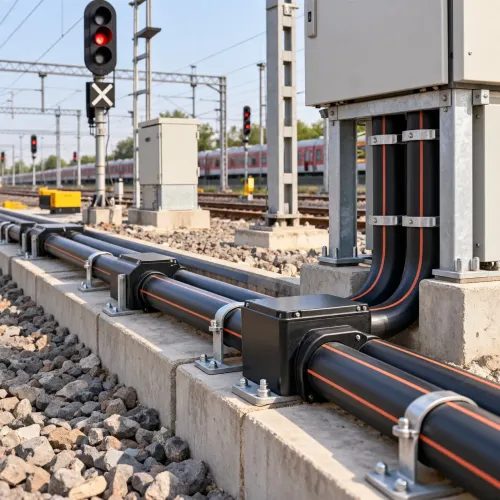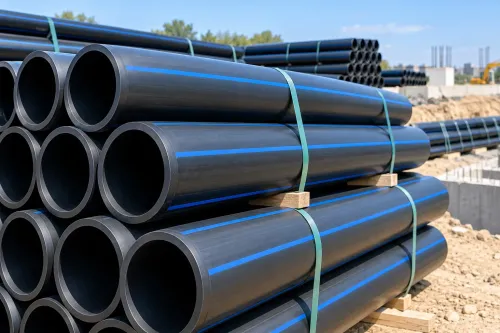
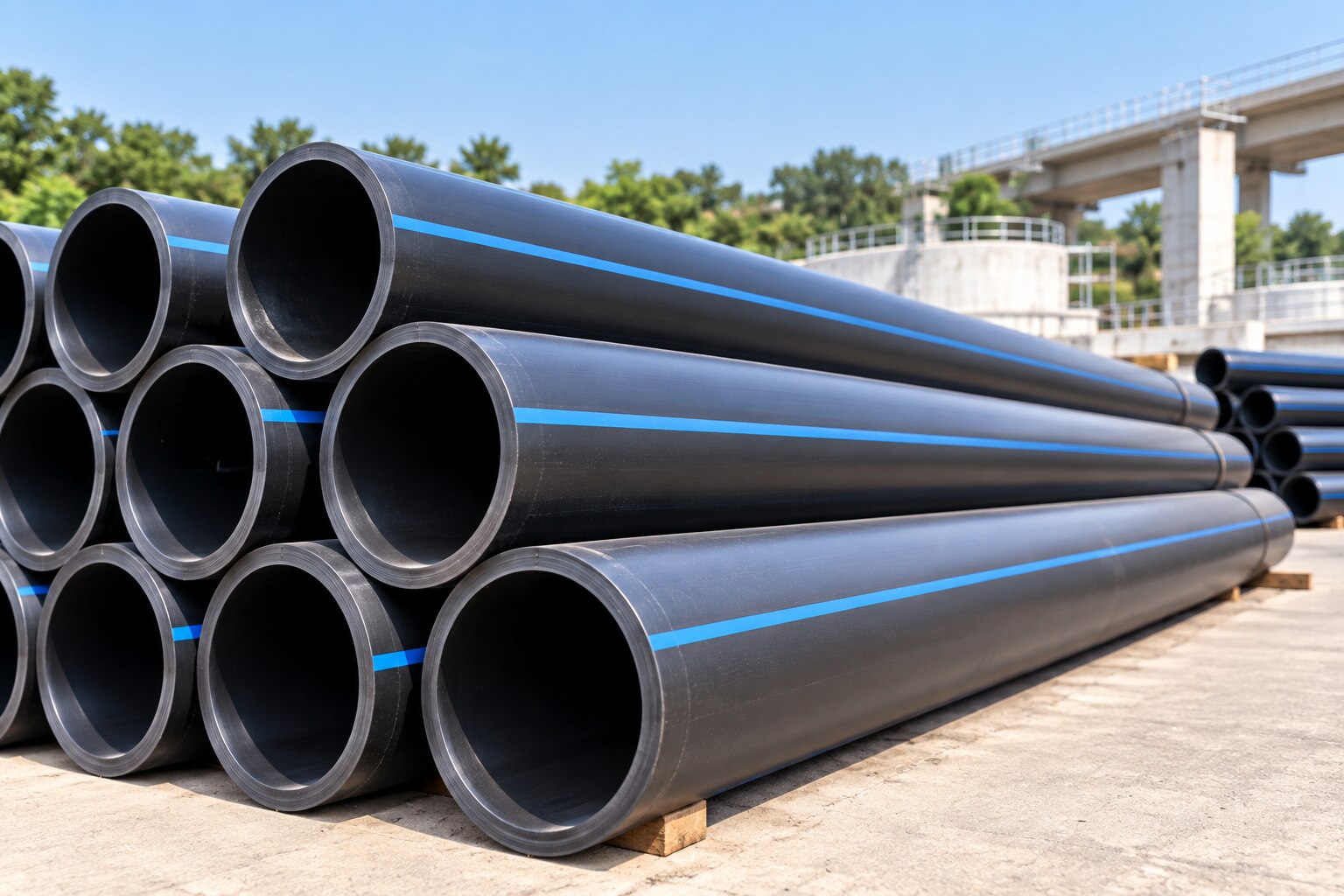
Nagpur’s southwest monsoon can turn an otherwise manageable water-supply installation into a sequence of flooded trenches, unstable bedding, contaminated joints and lost access. By planning work around rainfall, controlling excavation and dewatering, and documenting each fusion and test, you can reduce rework and keep pipe sections moving safely toward commissioning.
Key takeaways
- Finish crossings, approvals and permanent reinstatement before saturated ground restricts access.
- Clear utilities, arrange drainage and inspect the route before excavation begins.
- Keep trenches dewatered, bedding level and pipes restrained against rising water.
- Protect jointing areas from rain and record batch numbers before closing each section.
Plan Pipe-Laying Windows Before the Southwest Monsoon
Finish route surveys, utility clearances, road-crossing approvals, drainage arrangements and material inspections before heavy rain arrives. Complete sections that require reliable access, including major crossings and permanent reinstatement, rather than leaving them for saturated ground. This reduces water supply project delays in Nagpur caused by access loss, traffic restrictions and repeated excavation.
- Approve a section-by-section programme under IS 4984 and IS 7634, or ISO 4427 where the project specification adopts it; state which requirement governs any difference.
- Secure traffic-control permits, utility protection, pumps, standby power, discharge routes, trench support and bedding materials before opening ground.
- Inspect pipes and fittings, record batch details, cap every pipe end, and reserve clean, covered space for jointing equipment.
- Link each section to six release points: utility clearance, traffic control, dewatering, bedding inspection, pressure testing and reinstatement.
| Work window | Schedule this work | Stop or release condition |
|---|---|---|
| Dry forecast window | Excavate a short, drainable section, install and fuse pipe, test it, then backfill and restore access | Release the section only after bedding, joints and test results are accepted |
| Rain between showers | Work only where pumps maintain a dry trench and the route remains accessible; protect open ends from silt and runoff | Pause before rain if discharge, access or joint cleanliness cannot be controlled |
| Persistent heavy rain | Do not open new trench; secure exposed pipe, cover stock and inspect completed reinstatement | Resume after the trench is stable, water is removed and bedding passes inspection |
This short-cycle approach limits monsoon water infrastructure problems: flooded trenches, washed bedding, pipe flotation, contaminated fusion surfaces and unstable road restoration.
Prepare the Route, Trench and Worksite Before Excavation
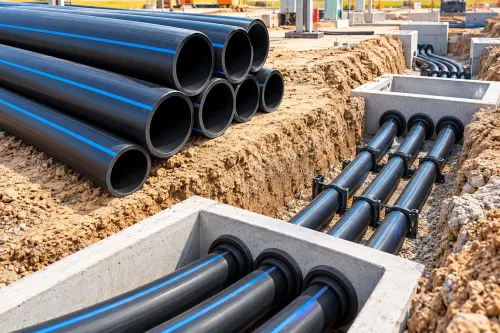
Before opening ground, verify the route, levels and drainage path for each short, drainable section. The Nagpur monsoon creates problems when excavation starts without confirming utility crossings, low points, access for pumps and a safe place for spoil.
1. Mark every existing water main, sewer, cable, gas line and service connection from current utility records, then expose crossings by hand or approved detection methods. Set out trench width, depth, cover and temporary traffic diversions.
2. Arrange shoring or a designed batter before excavation. Keep spoil, materials and vehicles back from the edge; saturated spoil loads the sidewall and can trigger collapse.
3. Prepare a sump, pump capacity and backup pump before rain arrives. Route discharge through a controlled outlet, filter or sediment-control arrangement—not across bedding, beside an exposed joint, into a storm drain or onto a road shoulder.
4. Divide the work into sections that can be excavated, laid, tested and backfilled promptly. Stop excavation when rainfall, groundwater or traffic makes the trench unsafe; do not leave a long open trench overnight without protection.
5. Protect excavated soil from runoff and keep pipe ends capped. For potable water, confirm that pipe, fittings, lubricants, temporary storage and commissioning materials are approved for drinking-water use.
Check buoyancy before lowering an empty HDPE pipe: compare submerged pipe weight with groundwater uplift, then arrange temporary ballast or staged backfill. Plan how hydrostatic test water will be contained and discharged under the project’s environmental and public-health controls.
Keep the Trench, Bedding and Pipe Stable in Rising Water
Install in short, drainable sections and close each section before the next storm cell. A long open trench invites sidewall collapse, bedding washout, pipe flotation and traffic damage; it also lets silt contaminate the line. This is the core control for hdpe water pipe monsoon installation.
- Pump from a sump, not across fresh bedding or an exposed joint. Route discharge through a controlled outlet, filter or sediment trap so it cannot scour the trench or carry silt into a drain or watercourse.
- Stop laying if water cannot be kept below the pipe zone. Remove saturated bedding, replace it with approved compacted material, and inspect the surface before lowering the pipe; never place it on mud or standing water.
- Keep every open pipe end capped. This blocks silt, insects and contaminated runoff, reducing cleaning before disinfection. Check that pipe, fittings and temporary storage materials are suitable for drinking-water service.
- Calculate flotation using the submerged pipe weight, groundwater level and expected flood depth. Add temporary ballast, anchors or controlled partial backfill before rising water can lift the pipe; pipe weight alone is unsafe for large diameters or shallow cover.
- Protect completed backfill from construction traffic with barriers, plates or an approved detour. Do not reopen access until compaction and reinstatement are stable.
For road crossings, link each section to traffic control, dewatering, bedding inspection, testing and restoration approval. If access fails or pumps lose capacity, suspend excavation and secure the trench rather than allowing monsoon water infrastructure problems to compound.
Control HDPE Jointing and Pipe Storage During Rain
Keep the fusion area under a clean, roofed shelter that blocks direct rain and wind. For an hdpe water pipe monsoon installation, dry the pipe ends, fittings, heating plate and electrofusion terminals before work starts; HDPE does not absorb rain, but water, silt and mud at the joint interface can cause leaks.
- Butt-fusion: cut back wet, muddy or oxidised ends, face them square, and repeat cleaning and alignment. Never compensate for contamination by changing heating time or fusion pressure.
- Electrofusion: scrape the oxidation layer to the fitting manufacturer’s specified depth, keep the prepared surface covered, and prevent rain from entering the fitting or contacting exposed terminals.
- Equipment: place the fusion machine, generator and cables on a dry platform above mud and standing water. Check cable insulation, clamps and electrical protection before energising.
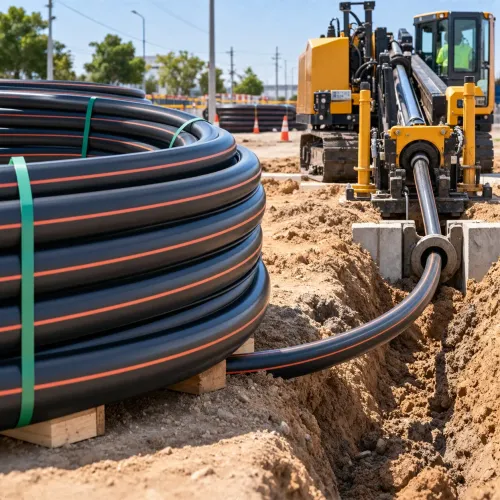
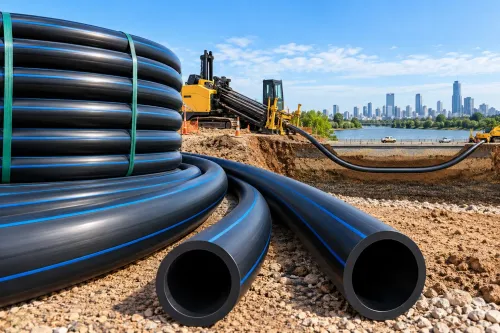
- Storage: keep pipes on level supports, away from runoff and vehicle routes, with every open end capped. Caps stop silt, insects and contaminated water entering a potable line.
Record each joint’s pipe and fitting batch, operator, machine, date, fusion parameters, cooling time, and any interruption or repair. A complete record separates weather-related rework from a pipe defect and supports inspection under the project’s specified standard, such as IS 7634, ISO 4427 or ASTM F2620.
Do not joint beside a flooded trench. Pump out the work area, replace contaminated bedding, and wait until surfaces are clean and dry. This discipline addresses the search for water supply pipe for problems monsoon nagpur without relying on a later flush to hide a poor fusion.
Choose Traceable Materials and Close Each Section Properly
Require an HDPE pipe supplier in Nagpur to identify the resin grade, PE classification, outside diameter, SDR or pressure class, governing standard and dimensional tolerances on the quotation and delivery documents. Ask the business, or any competing supplier, for batch traceability, test certificates and protection against sunlight, mud and impact during transport.
- State whether IS 4984 or ISO 4427 governs the pipe, and use IS 7634 for laying and ASTM F2620 for heat-fusion procedures where specified.
- Match pipes, fittings and electrofusion components by size, SDR and pressure rating; a cheaper metre rate can hide incompatible parts.
- Reject deliveries with missing batch numbers, damaged ends, ovalised sections or certificates that do not identify the supplied batch.
- Record pipe batch, joint number, chainage, fusion operator, machine settings and inspection result in the section dossier.
That evidence helps prevent water supply project delays nagpur crews face when a completed section cannot be accepted, tested or located later.
| Stage | Required control | Failure avoided |
|---|---|---|
| Pressure test | Divide the line into short sections; restrain ends, fill slowly, remove air and allow temperature stabilisation before reading the controlled test record. | False failures, movement and unsafe end-cap release |
| Flush | Flush with clean water until discharge is clear; disinfect and arrange water-quality sampling when the potable-water specification requires it. | Silt, construction debris and contaminated water entering service |
| Reinstate | Remove standing water, inspect bedding and surround, then place approved backfill in compacted layers; restore roads, markers and drainage. | Settlement, potholes, exposed pipe and repeat excavation |
Close each section only after the inspector signs the test, flushing and reinstatement records, updates as-built chainage and confirms traffic control has been removed safely. That sequence turns a monsoon-ready installation into an auditable one.
Related product
 | HDPE PIPE For Water Supply Infrastructure HDPE PIPE For Water Supply Infrastructure Our HDPE Pipes for Water Supply Infrastructure are designed to provide a dependable, durable, and efficient solution for the transportation and... View product → |
Frequently asked questions
When should you schedule pipe-laying work before Nagpur’s southwest monsoon?
Finish route surveys, utility clearances, road-crossing approvals and sections needing reliable access before heavy rain. Prioritise major crossings and permanent reinstatement before ground conditions deteriorate.
How do you prepare a trench and worksite for monsoon pipe installation?
Confirm the route, mark existing utilities, arrange drainage and plan access for equipment and deliveries before excavation. Keep spoil, traffic and runoff away from the trench edge.
How can you keep an HDPE water pipe installation stable during rain?
Control water entering the trench, maintain stable bedding and restrain pipes against movement while water levels rise. Do not leave an open section exposed longer than the work plan allows.
What should you control when joining and storing HDPE pipe during rain?
Keep jointing surfaces clean and dry, protect fusion equipment and pipe ends from contamination, and store pipes on stable supports away from standing water. Inspect each joint before backfilling.
What records should you check before closing a water-supply pipe section?
Confirm material identification and batch traceability, record completed joints and inspections, and verify that the section is properly restrained, tested and reinstated before closure.
Keywords