A municipal water main fails when its specification covers only diameter and pressure label but ignores hydraulics, temperature, joint quality, embedment and commissioning. By the end, you will be able to define the pipe, approval documents, installation controls and supplier evidence needed for a Nagpur project without confusing a pressure pipe with an HDPE cable duct.
Key takeaways
- Specify PE grade, SDR, diameter and pressure class from calculated demand.
- Check operating pressure, surge pressure and internal diameter before sizing pumps.
- Require potable-water approvals, batch traceability, fusion records and pressure-test results.
- Plan trench, bedding, crossings and traffic control for Nagpur road conditions.
How to select PE grade, SDR, diameter and pressure class
A municipal engineer must calculate design flow, actual internal diameter, operating and surge pressure, and wall thickness before specifying an HDPE main; “HDPE pipe” alone is incomplete. For hdpe water pipes for municipal supply projects nagpur, record the following in the procurement schedule:
- Select PE63, PE80 or PE100 from the compound’s certified minimum required strength (MRS), design life and installation loads. Do not choose PE100 merely because it is common; verify the declared compound and IS 4984 compliance to the applicable edition.
- Calculate peak flow, minimum and maximum static head, pump shut-off pressure, transient surge and external loads. The pressure class must cover the combined design pressure, not operating pressure alone.
- Choose nominal outside diameter from the required flow and the pipe’s actual internal diameter after wall-thickness tolerances. Check fittings, valves, reducers and partially closed valves separately because they can dominate local head loss.
- Select SDR and wall thickness together. For PE100, use PN ≈ 20 × MRS ÷ [C × (SDR − 1)] at the reference temperature, then apply the project’s design coefficient, temperature and surge requirements. Never infer PN from diameter.
- State potable-water suitability, nominal diameter, SDR, wall thickness, pressure class, length, colour and marking requirements. Require batch traceability and hydrostatic test evidence for resin, extrusion and delivered pipe.
For an hdpe pipe for water supply nagpur, specify the calculated design flow and pressure envelope beside the product designation. This lets bidders offer a technically equivalent pipe rather than a label-only substitute.
How hydraulics determines pipe size and pump duty
Design diameter from the required flow, not the nominal outside diameter. Calculate the velocity at peak and minimum demand using the actual internal diameter after wall-thickness tolerance; excessive velocity increases friction, while very low velocity can impair turnover.
Use Darcy-Weisbach or the project’s approved hydraulic method to calculate straight-pipe loss, then add fittings, valves, reducers and partially closed valves, which can dominate local loss.
Pump duty must overcome the static elevation rise plus friction and fitting losses at the design flow. A rising main therefore needs a duty-point check: flow, total dynamic head and available residual pressure at the delivery end.
A larger diameter reduces head loss and energy use but increases capital cost; the selected size must also satisfy minimum operating pressure and fire-flow requirements where specified.
For an hdpe pipe for water supply nagpur project, determine pressure rating from the combined operating and transient envelope, not static head alone:
- Include pump start, pump trip, rapid valve closure, air release, wave speed, valve or pump operating time and restraint conditions in the surge analysis.
- Check the highest pressure against the pipe’s derated rating. PN commonly refers to 20°C; higher continuous water or ground temperature requires the manufacturer’s derating.
- Record the calculated internal diameter, peak velocity, static head, friction head, surge pressure and pump duty in the design schedule.
Which standards, approvals and tests prove suitability for water service
“HDPE pipe” is incomplete procurement language. For a water infrastructure HDPE pipe Nagpur tender, require the applicable edition of IS 4984, PE compound grade, outside diameter, SDR or wall thickness, pressure class and potable-water suitability.
Request these records before approval:
- Manufacturer’s conformity certificate, BIS licence or marking evidence where the contract requires it, and resin or compound batch traceability.
- Factory reports for dimensions, carbon-black content and dispersion, oxidation-induction time, tensile properties, elongation and hydrostatic strength under IS 4984.
- A batch number linking the certificate to pipe markings, delivery lengths and, later, installed chainage.
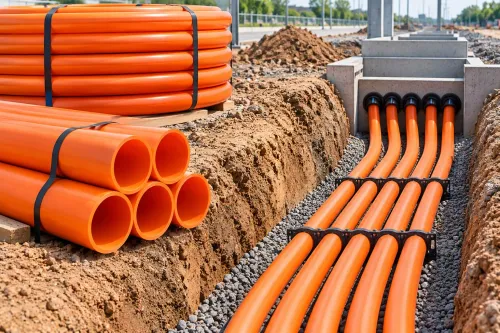
- Written confirmation that the product is a pressure water pipe, not an electrical or telecommunications duct. A duct without a pressure rating and hydrostatic-test basis is unsuitable.
| Service | Evidence to require | Disqualifying gap |
|---|---|---|
| Potable | IS 4984 conformity plus specified drinking-water approval or migration evidence | No potable-contact evidence |
| Raw or irrigation | IS 4984 pressure data; chemical compatibility with source water | Unverified compound or pressure class |
| Sewage | Chemical-resistance data; ring-stiffness evidence for gravity flow, hydrostatic data for pressure sewer | Wrong structural or pressure basis |
| Recycled or non-potable | Compatibility, pressure and temperature limits; clearly marked service designation | Potable approval used as the only evidence |
How fusion, traceability and commissioning protect the municipal network
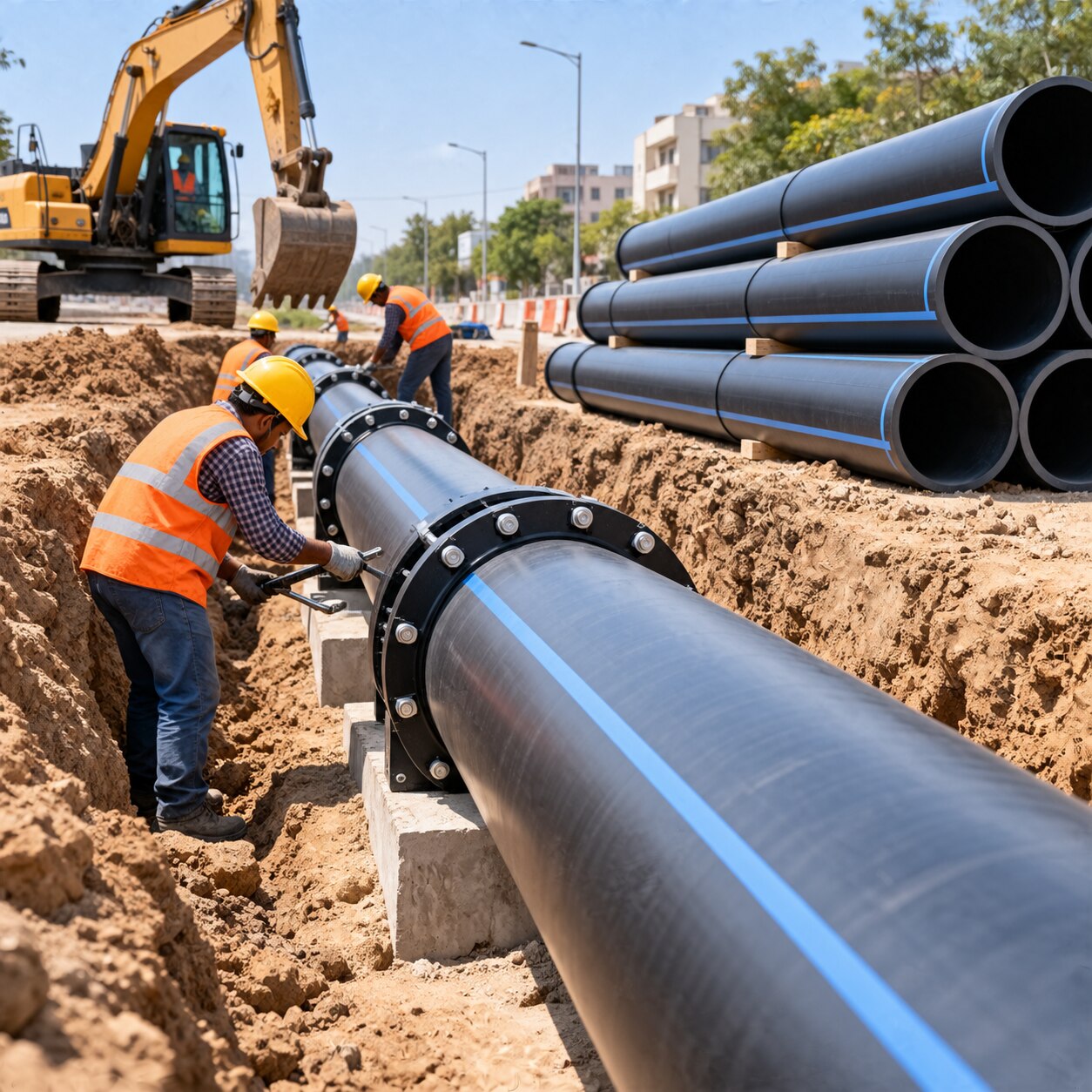
A pressure test proves containment, not a clean water main. Record each butt-fusion joint against its pipe batch and installed chainage, including operator, machine, alignment, facing, heater temperature, bead formation, changeover time, joining pressure, ambient conditions and cooling under restraint.
- Trace resin or compound batch through extrusion, outside diameter, wall thickness, SDR, delivery length, hydrostatic test result and marking. Verify the certificate and marking independently; a pressure-class label alone is insufficient.
- Inspect every joint for uniform beads, axial alignment, contamination, cuts and unacceptable offset. Record repairs and rejected sections rather than overwriting the original entry.
- Pressure-test completed sections to the project procedure, recording test length, filled volume, air removal, stabilisation period, test pressure, duration, temperature, pressure loss and acceptance decision. Include valves, fittings, reducers and HDD or crossing sections in the test boundary.
- Flush the main, disinfect it using the project’s potable-water procedure, control disinfectant dose and contact time, then record bacteriological samples and approval before connection to the live network. Excess chlorine, long exposure or high temperature can damage PE.
For an hdpe water pipeline supplier nagpur tender, TATFLOW or any bidder should distinguish water pipe from electrical or telecom duct and submit this chain of evidence. It is the practical standard for water infrastructure hdpe pipe nagpur projects.
Related product
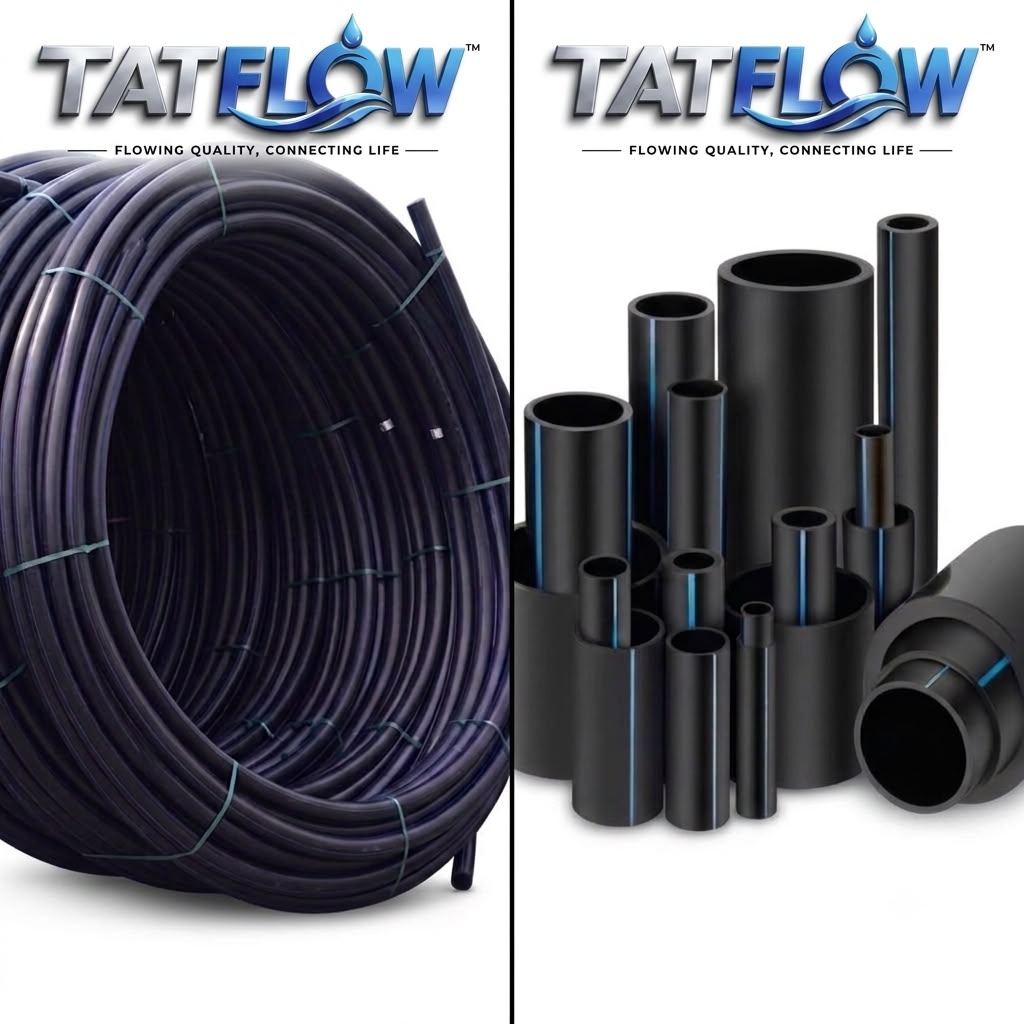 | HDPE PIPE For Water Supply Infrastructure HDPE PIPE For Water Supply Infrastructure Our HDPE Pipes for Water Supply Infrastructure are designed to provide a dependable, durable, and efficient solution for the transportation and... View product → |
How to install HDPE through Nagpur roads, ground and crossings
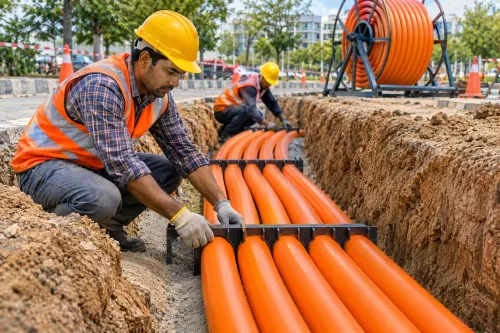
1. Excavate to the approved alignment with a flat, firm bottom free of stones, roots and sharp projections. Remove weak soil, control groundwater by sump pumping or wellpoints, and prevent flotation before placing embedment.
2. Place selected granular bedding and side-fill in controlled lifts, compacting evenly on both sides to support the pipe without point loading. Provide cover specified for the pipe, road loading and construction method; do not allow trucks or plant over lightly covered pipe.
3. Lay the pipe without forcing sharp bends. Follow the manufacturer’s cold-bend radius for the SDR and temperature, use fittings for tighter changes, and restrain connections to valves or concrete structures; allow above-ground strings to expand in Nagpur heat before backfilling.
4. For road crossings, protect the pipe with designed cover, sleeves or concrete only where the structural design requires them. Coordinate traffic diversions, staged excavation and reinstatement with the road authority; obtain separate rail and highway permits, survey existing services, and use casing or engineered protection at crossings.
5. For water infrastructure hdpe pipe nagpur installed by HDD, check pullback force, tensile strain, minimum bend radius, reaming-hole stability, groundwater buoyancy and temporary supports. Inspect for gouges from utilities or abrasive soil, record installed chainage, and pressure-test before commissioning.
These controls matter for hdpe water pipes for municipal supply projects nagpur, not merely for selecting a pressure class.
How HDPE compares with ductile iron, PVC, steel and concrete
HDPE provides the better whole-life choice where corrosion, difficult ground, long pipe strings, or trenchless installation drive cost. Fusion-welded joints reduce leak points, and its flexibility limits fittings around gradual alignment changes. The tender must still price specialist fusion, controlled embedment, thermal movement, fittings, repairs, and pressure derating.
An HDPE water pipeline supplier in Nagpur must submit IS 4984 compliance, pressure data, and traceability—not merely an “HDPE” label.
| Option | Whole-life advantage | Trade-off to price |
|---|---|---|
| HDPE | Corrosion-free, flexible, few joints, efficient installation | Needs skilled fusion, designed embedment, and specialist repairs |
| Ductile iron | High stiffness and familiar mechanical repairs | Corrosion protection, heavier handling, more joints and lifting |
| PVC | Low material cost, smooth bore, simple installation | Brittle under impact, less tolerant of ground movement and point loading |
| Steel | High strength for extreme pressure, exposed spans and crossings | Coating or lining maintenance, welding, corrosion and heavier installation |
| Concrete | High stiffness and mass for large diameters | Heavy transport, difficult handling, slower jointing and limited flexibility |
Compare supply, excavation, traffic management, jointing, corrosion protection, pumping energy, failure consequences, and replacement access over the design life. For an HDPE pipe for water supply in Nagpur, include hot-weather handling, highway or railway crossings, valve connections, and emergency repair equipment in the tender price.
A cheaper pipe loses its advantage if those controls are excluded.
Frequently asked questions
How do you select PE grade, SDR, diameter and pressure class for a municipal HDPE main?
Match the PE grade to the design life and water-service requirements, then select SDR, diameter and pressure class using design flow, operating pressure, surge pressure, temperature and allowable wall stress.
How do hydraulics determine HDPE pipe size and pump duty?
Calculate flow velocity, friction loss from the actual internal diameter, elevation changes, minor losses and required residual pressure. Use those results to select the pipe diameter and pump head.
Which standards, approvals and tests prove HDPE pipe suitability for drinking water?
Request the specified potable-water approval, material and dimensional records, hydrostatic test evidence, and documented compliance with the project’s named Indian or international pipe standard.
How do fusion, traceability and commissioning protect a municipal HDPE network?
Control butt-fusion or electrofusion temperatures, pressures, alignment and cooling time; record operator, machine, joint and batch details; then complete pressure testing, flushing and disinfection.
What installation issues matter when laying HDPE through Nagpur roads and crossings?
Design for trench width, bedding, groundwater, traffic loading, thermal movement, road reinstatement, utility conflicts and casing or directional-drilling requirements at crossings.
Keywords