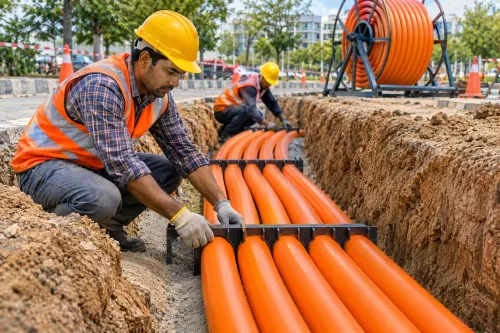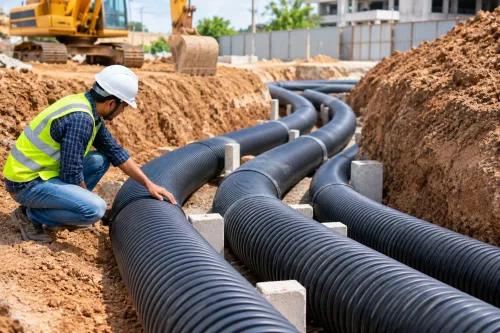
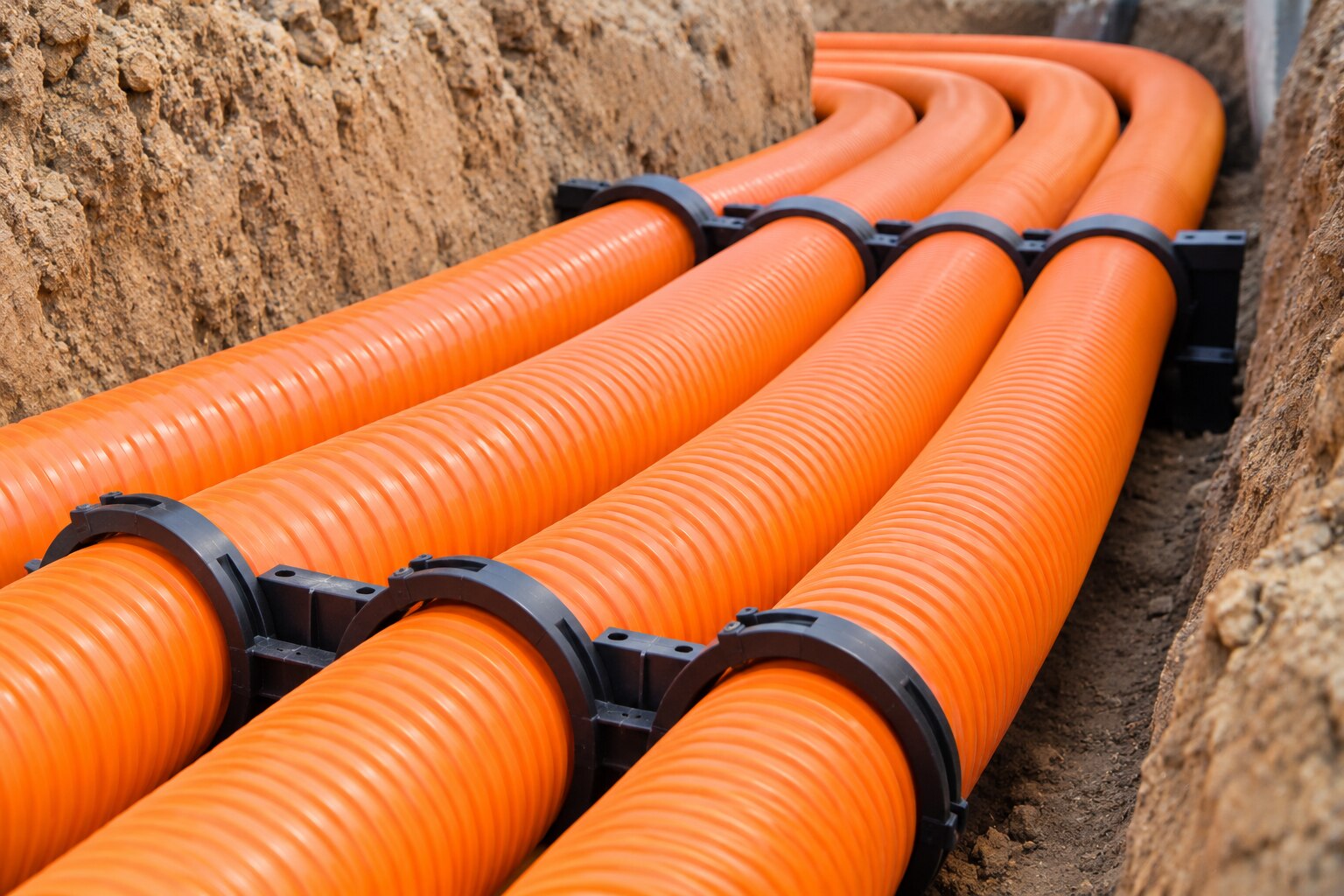
A PLB duct is not automatically safe from crushing, displacement, excavation strikes or railway maintenance activity because it is made from HDPE. You will be able to decide when direct burial is adequate, when a casing or load-distributing layer is justified, and which drawings, site checks and acceptance records must support that decision.
Key takeaways
- Use a chainage-based schedule to flag crossings, shallow cover and unstable ground.
- Design protection around actual loads, access constraints and cable-repair risk.
- Check railway, road and utility authority conditions before approving the route.
- Record duct depth, protection, mandrel results and as-built chainages at handover.
Use a route schedule to identify where the duct needs more than burial
Make the first decision from a chainage-based route schedule, not from the fact that the duct is HDPE. Flag every location where specified cover, loading, ground stability, authority conditions or future excavation could threaten the duct or the cable inside it.
The schedule should record:
- Chainage, coordinates and existing and finished ground levels
- Proposed cover and trench depth
- Road, railway, bridge, culvert, drainage and utility crossings
- Vehicle, construction-plant and repeated axle loading
- Soil condition, groundwater, erosion, flooding and embankment stability
- Planned resurfacing, widening, utility work and building connections
- Chamber positions, clearances, authority approvals and reinstatement responsibility
- The protection detail and test required before handover
Give a protection flag when the duct cannot retain its specified cover, when a concentrated load can reach it, or when another contractor could excavate across it without reliable route detection. Warning tape alone does not solve that risk; it identifies a route but does not resist an excavator.
For anyone searching when plb duct pipe for needs extra route protection nagpur, the answer depends on the exact chainage and controlling owner, not on a citywide rule. Obtain the road-owner, railway, NHAI, municipal or project drawing before pricing the work.
The plb duct protection requirements should name the casing, slab, encasement or other measure at each flagged location.
Treat crossings, shallow cover and unstable ground as design changes
A railway crossing, road crossing, shallow-cover section or unstable formation is a design change, not routine burial. Railway duct route protection conditions include proximity to tracks, points equipment, signalling cables, ballast, drainage and railway boundaries; obtain the railway authority’s approved method before excavation.
| Condition | What changes | Protection trigger |
|---|---|---|
| Railway, station, maintenance yard or access road | Ballast settlement, axle loads, plant movement and future excavation concentrate loads | Use the approved crossing sleeve, casing, slab or encasement system |
| National highway, municipal road, bridge or culvert | Traffic loading, limited cover, drainage and utility congestion restrict the trench | Confirm the road owner’s detail; protect the carrier and both transitions |
| Shallow cover or exposed route | Wheel loads, erosion and later digging can reach the duct | Add cover, selected backfill, warning slabs or a rigid protective system |
| Black-cotton soil, soft shoulder, high groundwater or flooded trench | Swelling, settlement, flotation and trench-wall collapse can displace the duct | Stabilise the formation, control water and design bedding and backfill for movement |
| Rock, sharp spoil or active construction zone | Point loading, heat, crushing and undocumented crossings threaten the duct | Remove sharp material and control plant, joints and access |
Railway duct installation hazards include poor bedding, crushed or displaced duct, incorrect bend radius, blocked draw rope and water ingress. Check these before reinstatement; rigid protection can still fail where it ends if adjacent ground settles differently. A dry-season inspection alone misses monsoon drainage and waterlogged excavation risks.
Match the protection method to the load, access and repair risk
Choose the least rigid protection that safely carries the expected load and still permits repair. Deeper burial suits a route where cover is short but excavation access remains available; a rigid barrier suits concentrated loading, third-party excavation or severe cable-damage consequences.
The railway duct route protection conditions must come from the approved railway drawing, not a universal depth promise.
| Option | What it does | When it applies |
|---|---|---|
| Deeper burial | Restores specified cover | Shallow sections with stable soil and no fixed obstruction |
| Selected backfill | Supports the duct and removes sharp-point loading | Rock, poor native soil, high groundwater or weak bedding |
| Reinforced slab | Spreads wheel or plant loads near the surface | Roads, access tracks and shallow crossings where depth cannot increase |
| Concrete encasement | Creates continuous load transfer around the duct | High concentrated loads or authority-specified protection; extend it through transitions |
| Outer duct | Adds a replaceable protective layer | Routes exposed to later excavation or where the carrier duct needs mechanical separation |
| Steel casing | Resists heavy external loads and protects a carrier duct | Railway, highway or plant crossings when the approved design specifies steel |
| Dedicated crossing sleeve | Provides a defined, replaceable crossing assembly | Railway or major-road crossings requiring installation without reopening the formation |
Apply the PLB duct protection requirements to the whole system: bedding, side support, cover, casing stiffness, chamber transitions and compaction sequence. A rigid crossing can become a failure point where settlement changes at its ends. Require a chainage-specific schedule showing casing limits, clearances, authority approval and the repair method before pricing.
Prove the design against drawings, authorities and Nagpur site conditions
Approve the detail only after the chainage drawing, authority condition and surveyed ground levels agree. A telecom cable route protection Nagpur design must show existing and finished levels, cover, casing or slab limits, chamber locations, utility clearances and reinstatement limits—not just a typical trench section.
1. Compare the route schedule with a topographic survey and trial pits. Confirm road crossings, railway land, culverts, drains, embankment toes, groundwater, rock and unstable soil. Recalculate cover at every low point and crossing.
2. Obtain written conditions from the road owner, municipal authority, railway, NHAI, utility owner or private developer. Record the required casing, concrete grade, slab detail, clearance, access restriction and inspection hold point against each chainage.
3. Check the PLB duct purchase specification, not only its nominal diameter. Verify wall or SDR, internal bore, bend radius, pulling-force limit, jointing method, crush requirement and compatibility with the proposed sleeve, encasement or selected backfill.
4. Have the designer verify traffic, axle, construction-plant and future-excavation loads, then issue a signed protection schedule. Add detectable markers, route markers and surveyed coordinates where later digging threatens the route; warning tape alone will not stop an excavator.
Before construction, resolve the query “when plb duct pipe for needs extra route protection nagpur” against the approved chainage detail, authority letter and site survey. If any one conflicts, stop procurement of the protection system until the drawing is revised.
Control installation and handover so protected ducts remain usable
Cap every duct end before trenching, jointing and cable installation. Silt, slurry, water and rodents can block a sound duct, causing a failed pull that is wrongly blamed on the cable. Keep the draw rope continuous, protect the specified bend radius, and prevent vehicles from crossing an open trench.
| Control | Acceptance check | Handover record |
|---|---|---|
| Bedding and backfill | No sharp rock; selected fine material surrounds the duct; warning tape or marker tiles sit at the specified level | Photos, material delivery note and measured cover |
| Duct proving | Mandrel passes the full route; brush or swab exits clean; draw rope is continuous and secured at capped ends | Test date, mandrel size, route section and witness |
| Railway or road crossing | Permit, separation and protection match the owner’s drawing; no displaced, crushed or water-filled duct | Approved drawing, permit, inspection sheet and reinstatement photos |
| Future excavation control | Route markers and detectable tracing system are installed; surveyed coordinates identify joints, chambers and crossings | As-built plan, coordinates, depth readings and marker locations |
Specify outside diameter, wall or SDR, internal bore, bend radius, pulling-force limit, joint method, reel length, colour identification and route-protection detail in the purchase order. A water-pipe pressure rating alone does not prove cable-pulling suitability. Tatiwar Agro Industries can be evaluated against those records, not against a catalogue name.
For telecom cable route protection in Nagpur, retain batch numbers, delivery inspection, approved submittals and nonconformance closures. Record railway duct installation hazards such as ballast entry, drainage flooding, heat damage and undocumented joints before reinstatement; future maintenance depends on evidence no one can see underground.
Related product
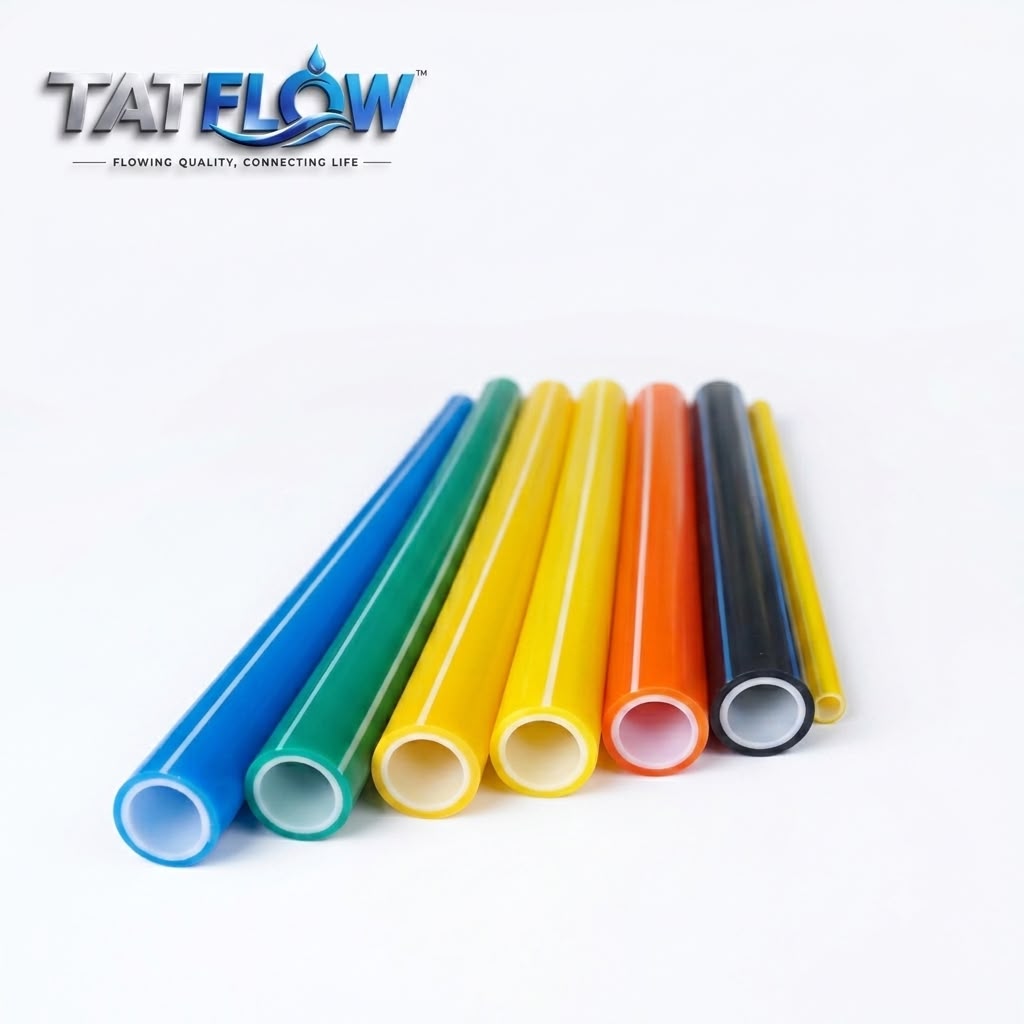 | PLB DUCT pipe for Railway Signal & Telecom Ducting TATFLOW PLB DUCT pipe for Railway Signal & Telecom Ducting TATFLOW PLB Duct Pipe is a high-quality ducting solution designed for the safe and efficient installation and protection of Railway Signal,... View product → |
Frequently asked questions
When does a PLB duct pipe need extra route protection?
Flag extra protection where specified cover is unavailable, heavy loads cross the route, ground is unstable, authorities impose conditions, or future excavation threatens the duct or cable.
Which railway duct route protection conditions need attention?
Review railway crossings, restricted right-of-way, construction traffic, settlement risk, access for maintenance and any railway authority requirements for depth, casing or concrete protection.
How do you choose a PLB duct protection method?
Match the method to the expected load, available cover, soil stability, access for repairs and the consequence of cable damage. Options can include increased cover, warning protection, concrete encasement, sleeves or a designed crossing detail.
What should you verify before handing over a protected telecom duct route in Nagpur?
Compare the installed route with approved drawings and authority conditions, then record chainages, depths, crossings, protection details, duct continuity, mandrel results and as-built changes.
Keywords